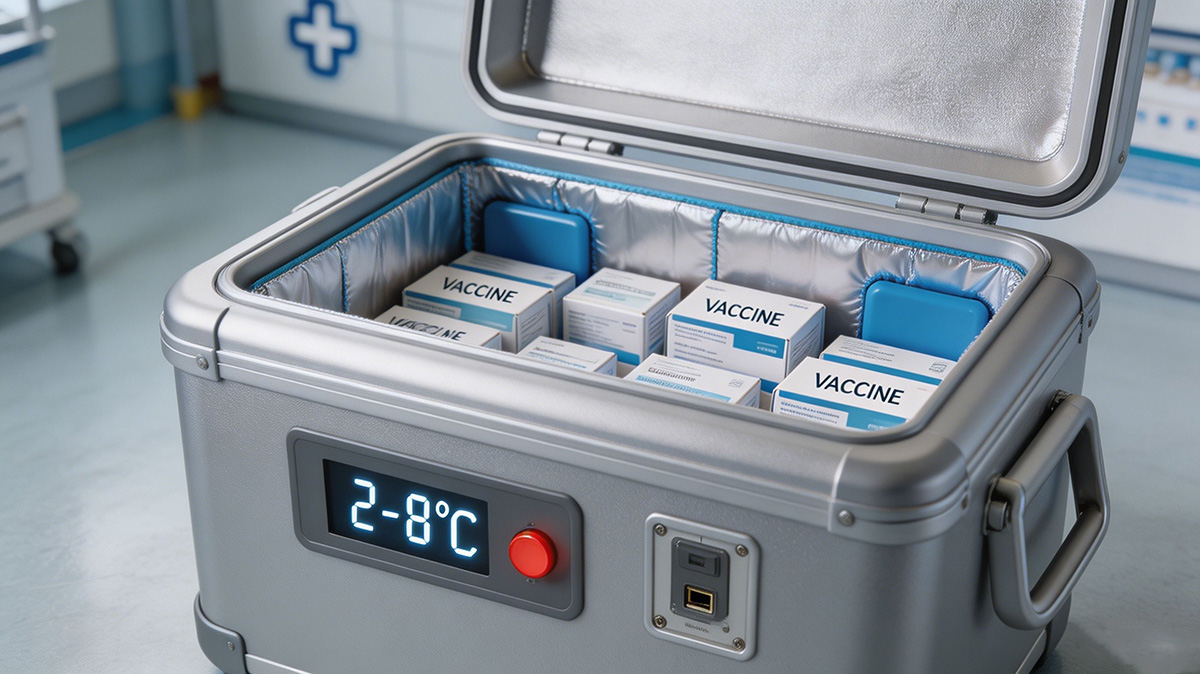
Vaccines save millions of lives every year, but they are very sensitive and vulnerable. They must be properly stored within a certain temperature range throughout the entire process from manufacturing to administration to patients. Only in this way can they remain effective. Otherwise, it will bring about vaccine loss, resource waste, and cost increases, and patients will not be able to get vaccinated at the appropriate time.
Medical-grade vaccine coolers play a vital role in the transportation and delivery of vaccines. Unlike camping coolers or travel coolers, medical-grade coolers are specially designed to meet the rigorous demands of vaccine storage. Whether you are a healthcare provider, are in need of vaccines, or run a clinic, this article will help you know more about medical-grade vaccine coolers.
Why Are Medical-Grade Vaccine Coolers Different from Household Coolers?
Medical-grade coolers and household coolers may look similar, but they serve totally different purposes. While a household cooler is designed to keep food and drinks cold while doing outdoor activities, a medical-grade cooler must maintain a stable 2–8°C temperature to protect the vaccines.
In addition, household coolers use ordinary ice packs that often contact contents directly, which may lead to localized freezing. Medical coolers utilize phase change materials (PCMs)—substances that can melt and solidify at specific temperatures—along with vacuum insulation panels (VIPs) that greatly extend thermal retention time.
Transport capability is another key difference. A vaccine cooler is an insulated container specially designed to maintain certain temperatures during transit. Compared to regular coolers, they have more advanced insulation systems and temperature monitoring systems, and they are more airtightly sealed.
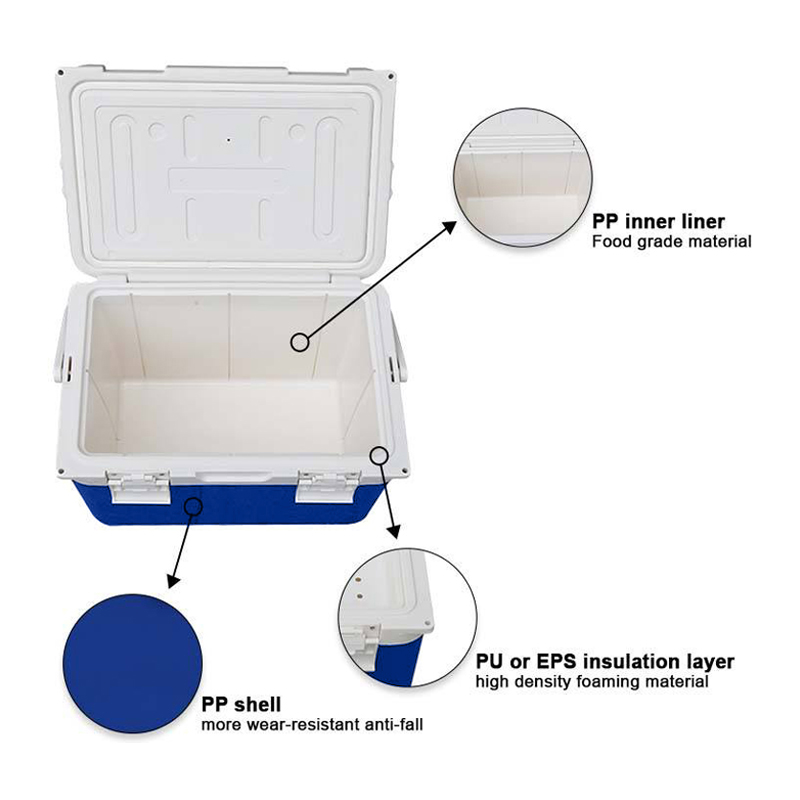
Key Requirements for a Medical-Grade Vaccine Cooler
1. Stable Temperature Control
Different vaccines require different storage conditions. Therefore, a medical-grade vaccine cooler must be capable of maintaining specific temperature ranges depending on the type of vaccine.
- Medium Temperature Refrigeration: Most vaccines, including inactivated vaccines and many COVID-19 vaccines, require a stable temperature between 2°C and 8°C (36°F to 46°F).
- Low Temperature Freezing: Some vaccines, such as Moderna’s COVID-19 vaccine and varicella vaccines, must be stored between -50°C and -15°C (-58°F to 5°F).
- Ultra-Low Temperature Freezing: A few vaccines, including the Pfizer-BioNTech COVID-19 vaccine, require temperatures between -80°C and -60°C (-112°F to -76°F).
Even minute temperature changes can permanently reduce vaccine potency, so a medical-grade vaccine cooler must ensure that the temperature of vaccines remains stable during transportation. According to WHO PQS Prequalification, a vaccine cooler must be able to maintain an internal temperature of 2–8°C for at least 48 hours under an ambient temperature of 43°C.
2. Good Insulation Materials
Medical-grade vaccine coolers are required to use good insulation materials such as vacuum insulation panels (VIPs) and phase change materials (PCMs) to extend thermal retention time.
A vacuum insulation panel (VIP) is a high-performance thermal insulation material. It uses vacuum encapsulation technology to evacuate the porous core material (such as fumed silica or precipitated silica) to a near-vacuum state, which greatly reduces gas conduction and convection heat transfer, thereby achieving an ultra-low thermal conductivity of 0.002–0.004 W/(m·K)—approximately one-tenth that of polyurethane foam. However, VIPs are costly, and they are prone to damage because of their low compressive strength. Therefore, many medical-grade vaccine coolers combine VIPs with foam insulation to minimize heat transfer while being shock-resistant.
A phase change material (PCM) is a functional material that undergoes a solid-liquid (or solid-solid) phase transition at a specific temperature, during which it absorbs or releases a large amount of latent heat while its own temperature remains basically unchanged, making it suitable for temperature regulation. For example, a specifically formulated paraffin-based PCM can absorb heat for several hours before melting, thereby maintaining an internal temperature of 2–8°C without an external power supply. Some advanced PCM-based systems can even maintain temperatures below -60°C for over 48 hours. Moreover, PCMs with different melting points can be combined to achieve multi-zone temperature control.
3. Continuous Temperature Monitoring
Advanced medical-grade vaccine coolers are equipped with continuous temperature monitoring devices, specifically data loggers. By constantly tracking the temperature inside a cooler, a data logger can alleviate the risk of vaccines’ efficacy loss during the transportation process.
A standard data logger for vaccine coolers must have the following features:
- A high degree of accuracy: The margin of error of the device is 0.5°C.
- Recording the temperature regularly: The temperature inside a cooler should be recorded at least every 30 minutes.
- An alarm system: The device must sound the alarm to alert users when the temperature is beyond the normal range.
4. Portability and Durability
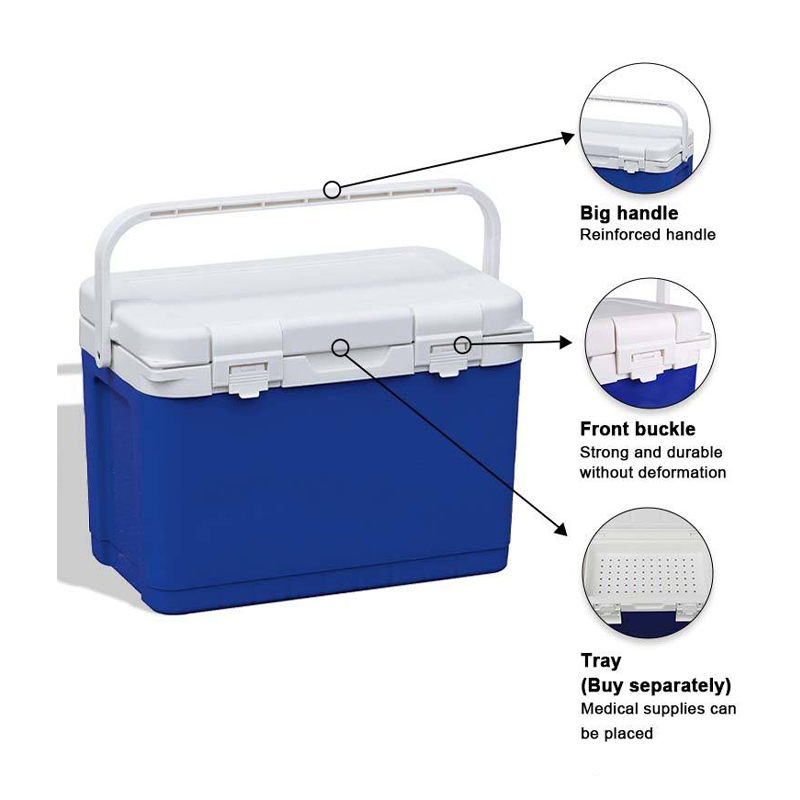
The basic requirement for a useful vaccine cooler is to be light, compact, and easy to carry so that it is suitable for short-distant transportation. Meanwhile, it must be robust enough to withstand shocks during the delivery process. These features of a vaccine cooler ensure that vaccines remain safe and effective from the moment they leave a refrigerator or freezer to the point of administration.
5. Proper Internal Organization
Even the best vaccine cooler can become useless if vaccines inside it are stored incorrectly. Proper organization is definitely required.
- Store Vaccines in Original Packaging: Vaccines must not be taken out of their original boxes until administration.
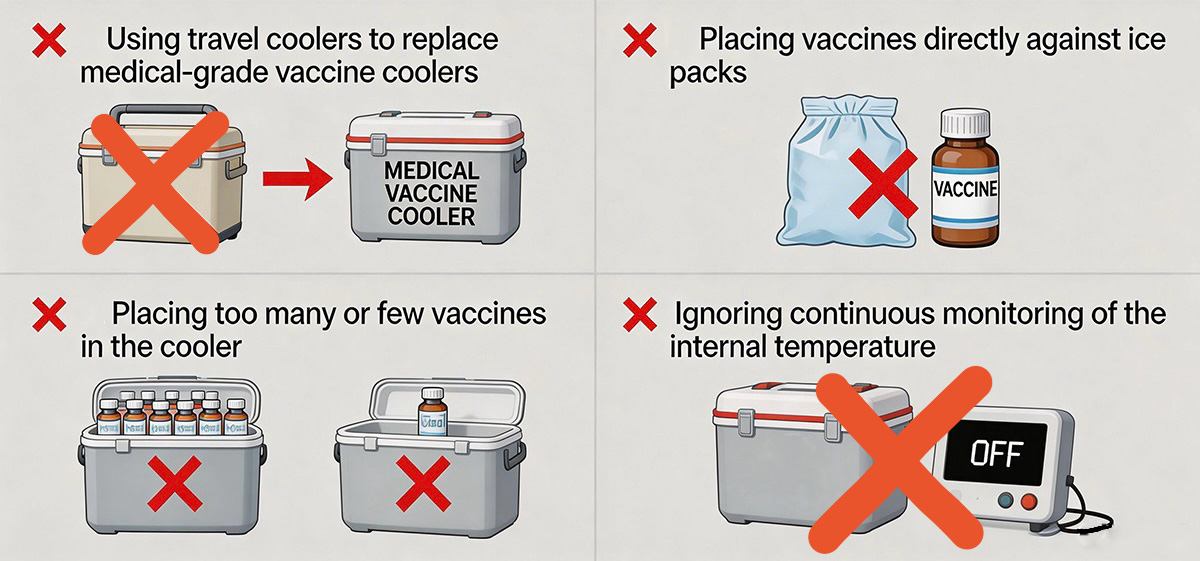
- Maintain Inside Airflow: Do not place too many vaccines in the cooler; otherwise, they will block air circulation and bring about uneven temperature distribution inside the cooler.
- First-Expiry, First-Out (FEFO): Check the expiration dates of the vaccines inside the cooler regularly to ensure vaccines with the earliest expiration date are used first.
- No Food or Beverages: Vaccine coolers must never contain food, drinks, or any non-medical items.
6. Training and Recordings
Equipment alone cannot guarantee vaccine safety. Well-trained staff are equally essential.
Every facility should designate a primary vaccine coordinator responsible for all storage and handling activities. All staff members who receive, handle, or administer vaccines must complete relevant training.
A written SOP manual should be kept near the vaccine cooler and include:
- Routine storage and handling procedures
- Temperature monitoring and documentation protocols
- Emergency response plans
- Contact information for vaccine manufacturers, immunization programs, and equipment service providers
Common Mistakes to Avoid
Conclusion
A medical-grade vaccine cooler is far more than a cold box. In order to protect vaccines during the transportation process and prevent vaccine loss, resource waste, and cost increases, a vaccine cooler is required to be portable and durable, use good insulation materials to maintain the inside temperature, as well as monitor the inside temperature continuously.
As a reliable and experienced custom medical device manufacturer, KingStar specializes in producing high-quality medical-grade vaccine coolers. We strictly adhere to the CDC Vaccine Storage and Handling Toolkit and the WHO PQS Prequalification when designing our vaccine coolers, so we won’t let you down. Contact us at sales@kingstarmold.com for more information and to address your requirements; we will reply to you within 24 hours.
References
- Centers for Disease Control and Prevention. (2024). Vaccine storage and handling toolkit. https://www.cdc.gov/vaccines/hcp/admin/storage/toolkit/index.html
- ASHRAE Refrigeration Technology Committee. (2021). Practical guidance for COVID-19 vaccine refrigerated transportation and storage. https://www.ashrae.org/file%20library/technical%20resources/covid-19/practical-guidance-for-vaccine-refrigerated-transportation-and-storage-abstract.pdf
- UNICEF Supply Division. (2021). Procurement guidelines: Vaccine carriers and cold boxes. https://www.unicef.org/supply/documents/cold-chain-equipment-procurement-guidelines
- World Health Organization. (2015). Vaccine management handbook: How to use passive containers and coolant-packs for vaccine transport and outreach operations (WHO/IVB/15.03). https://www.who.int/publications/i/item/WHO-IVB-15.05

Boasts more than 20 years of professional experience in the manufacturing industry, with profound expertise in injection molding and mold building. Possesses comprehensive technical capabilities covering mold design, processing and molding optimization, providing reliable technical support for product development and production.