Last modified: June 3rd, 2026
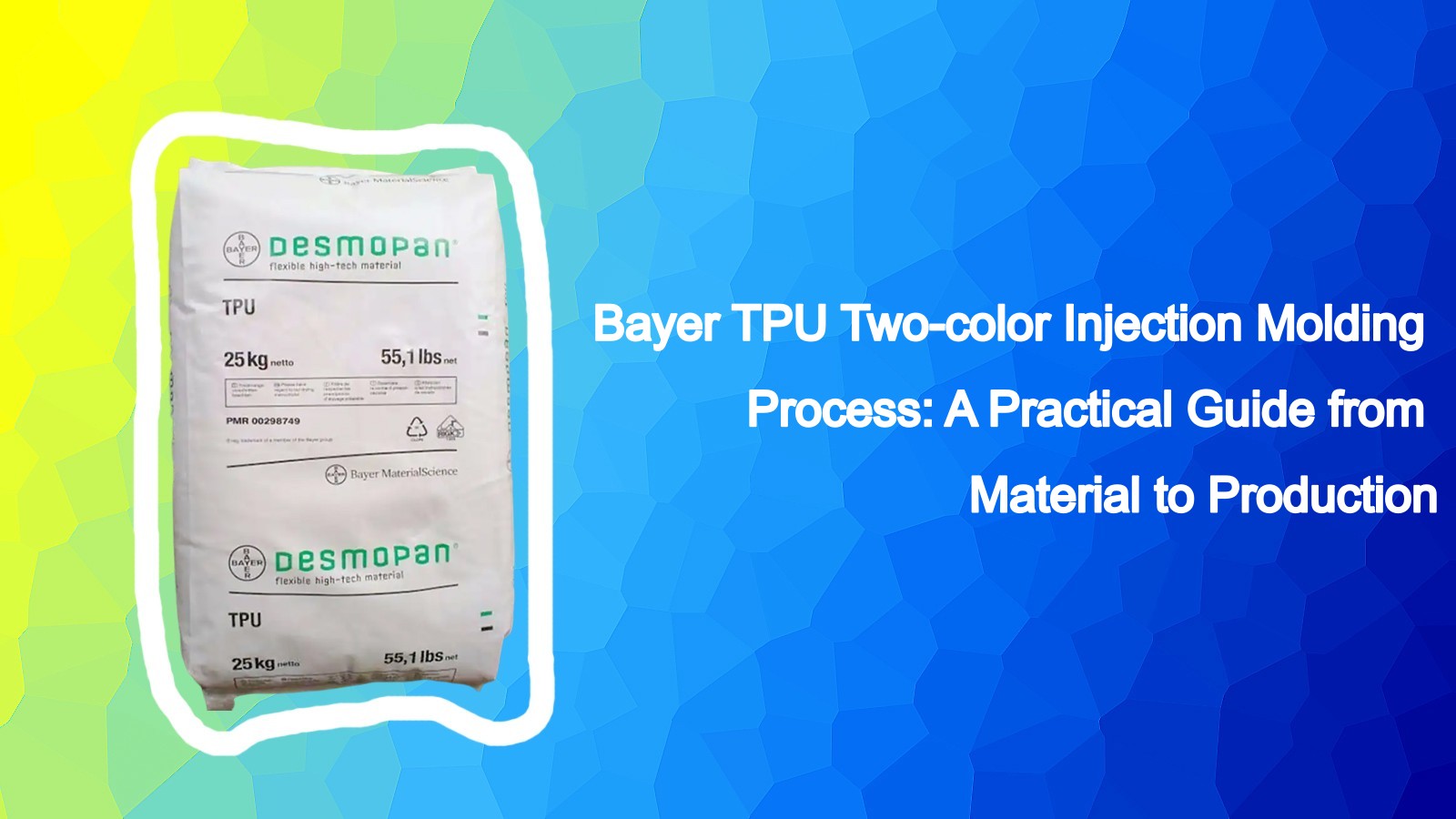
Soft handles peeling off hard substrates? Production lines falling short of capacity? If you are beset with such problems in the two-color injection molding process, this article is exactly what you need. At Kingstar, we have worked in this industry for years, and we’ve seen it all too often. In many cases, the solution was not a faster assembly line or a better glue—it was the change of material: switching to Bayer TPU (now Covestro, but still widely known as Bayer TPU), and the problems were easily solved.
Drawing on material science principles, mold design expertise, and real-world production data from the injection molding industry, this article provides practical, evidence-based answers to the question: “Why choose Bayer TPU for two-color injection molding?”
What Is Two-Color Injection Molding?
Two-color injection molding, also known as two-shot or 2K molding, is a manufacturing process that injects two different materials or colors into the same mold within machine one cycle, producing a part composed of both materials. The first material is called the substrate. It is typically a rigid plastic like ABS, PC, or PC/ABS. The second material—an elastomer like TPU—is then injected onto or around the substrate while the part remains in the mold.
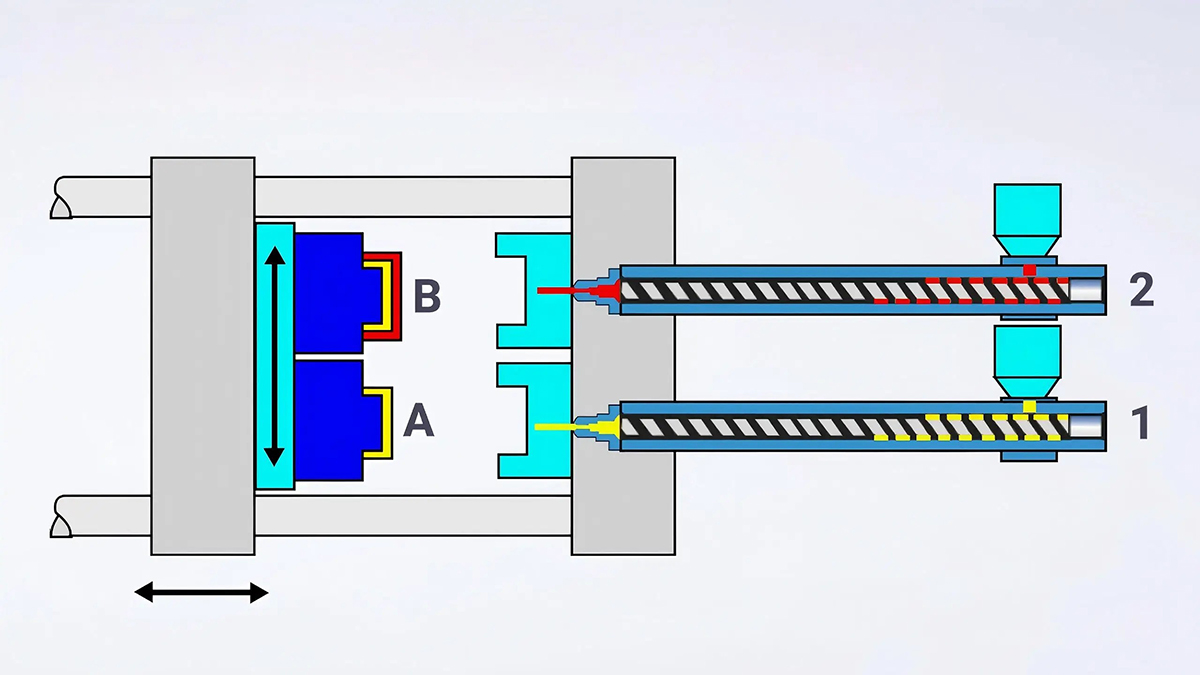
Two-Color Molding vs. Overmolding
Many engineers confuse two-shot molding with traditional overmolding. Their differences are as follows.
| Feature | Two-Shot Molding | Overmolding |
| Machine | One two-shot machine with two injection units | Two separate machines or two setups on one machine |
| Part transfer | Automatic (rotating platen or core-back) | Manual or robotic |
| Positional accuracy | ±0.05 mm (single setup) | Wider tolerance due to repositioning |
| Cycle time | 1.2–1.5× single-shot cycle | ~2× single-shot cycle |
| Tooling cost | 60–80% higher than single-cavity | Lower (two simpler molds) |
| Best for | High volume | Low to medium volume |
Why Choose Bayer TPU for Two-Color Injection Molding?
Not all TPU materials are the same. Bayer TPU (now Covestro’s Desmopan® and Texin® series) has been the industry benchmark for multi-shot molding for decades. Here is why.
1. What Is TPU, and Why Is It Ideal for Two-shot Molding?
Thermoplastic polyurethane (TPU) is a block copolymer composed of a soft segment and a hard segment arranged alternately. This “soft-hard alternating” structure endows TPU with unique properties: it can be as elastic as rubber at room temperature and can flow like thermoplastic plastic at high temperatures as well.
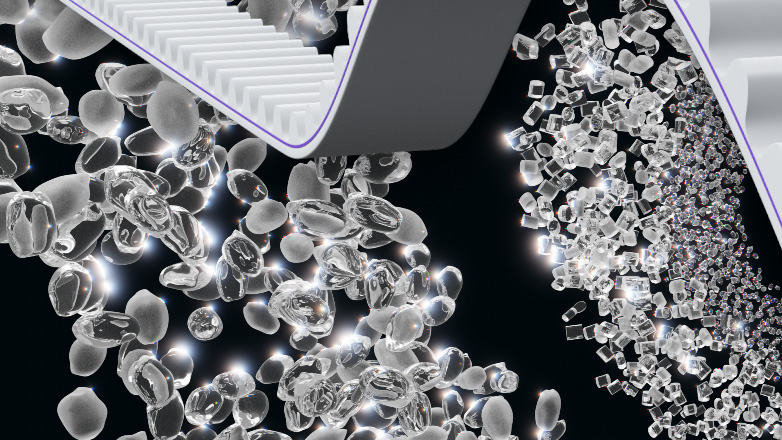
Key properties of TPU in two-shot injection molding:
- High tensile and tear strength: superior to PVC and traditional rubber
- Excellent wear resistance: crucial for moving or handheld components
- Chemical resistance: resistant to oil, grease, fuel, and various solvents
However, the most crucial reason that TPU outperforms other materials in two-color injection molding lies in its polarity. TPU contains polar amine carbamate groups, which can form hydrogen bonds with other polar polymers such as ABS, PC, and PA. This means the two injected materials can be firmly bonded without the need for primer or adhesive.
2. Why Choose Bayer TPU Instead of Ordinary TPU?
After decades of field testing, Bayer TPU stands the test of time because of its five distinct advantages.
- Chemical compatibility: Bayer has developed specific TPU grades, and different grades are designed to have a high level of adhesion to common hard substrates such as ABS, PC, PC/ABS, and PA (nylon). Unlike many other TPU brands, Bayer TPU achieves true chemical bonding and provides convenience for customers.
- Thermal stability: Lower-grade TPU often degrades when the temperature exceeds 200°C. In that case, it will release gas and block the exhaust vent, resulting in flash marks. In contrast, Bayer TPU remains viscous when the temperature is as high as 220°C.
- Wide Shore hardness range: The Shore hardness of Bayer TPU ranges from 60A (gel-like softness) to 98A (semi-hard). Its shrinkage rate is consistent with hardness and therefore predictable, and this is crucial for mold design.
- No plasticizers: Bayer TPU is inherently soft and does not rely on plasticizers, thus free from long-term plastic leaching. Plasticizer migration over time can also lead to hardening or surface stickiness.
- Sustainability: The CQ (Circular Intelligence) series of Bayer TPU uses renewable and alternative materials as well as chemical recycling technologies to reduce the carbon footprint.
3. Mechanical Range
Choosing the right Shore hardness is the first step in the engineering decision-making process. The table below summarizes the performance and recommended shrinkage rates of typical Bayer TPU grades.
|
Shore Hardness |
Typical Grade Series | Tensile Strength (MPa) | Elongation at Break (%) | Recommended Shrinkage |
Typical Applications |
|
60A–70A |
Desmopan® low hardness | ~25 | 600–800 | 1.6%–1.8% |
Soft-touch handles, wearables, medical grips |
|
75A–85A |
Desmopan® general purpose | ~35 | 500–700 | 1.2%–1.5% |
Power tool grips, phone cases, seals |
|
90A–98A |
Texin® high hardness | ~45 | 400–550 | 0.6%–0.9% |
Casters, hydraulic seals, automotive interior structural parts |
Core Factors Affecting the Results of Bayer TPU Two-Color Molding
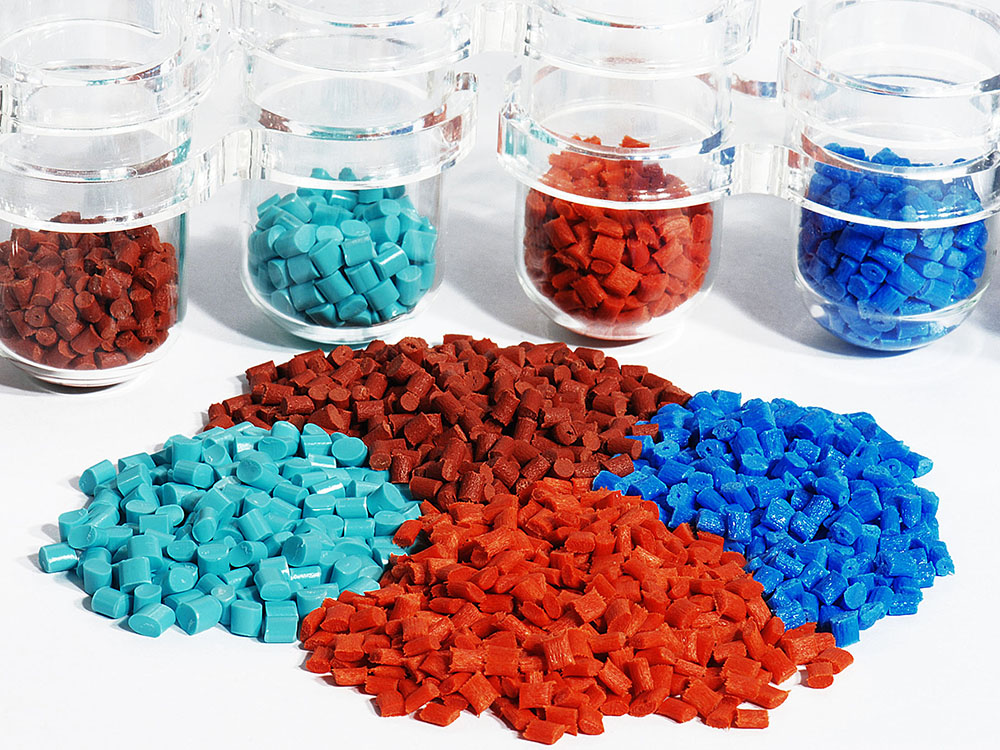
Two-color injection molding with elastic TPU typically uses two materials: the elastic TPU itself and a rigid plastic. If the adhesiveness between them is poor, it indicates an error in the initial design stage, which will lead to serious problems in the subsequent production. In order to address this issue, Bayer has developed several TPU materials with Shore hardness ranging from 60A to 98A. Specially designed for two-color injection molding, they have good bonding strength and excellent tear strength on rigid plastics such as ABS, PC, and PC/ABS.
|
Substrate |
Recommended TPU Shore Hardness | Bond Strength | Special Notes |
|
ABS |
85A–95A | >20 N/cm |
No primer needed |
|
PC |
75A–85A | >18 N/cm |
Control mold temp at 50–60°C |
|
PC/ABS |
75A–85A | >20 N/cm | Excellent for automotive interiors |
2. Mold Design
Shrinkage rate is the most important thing to consider when designing the molds for TPU materials. For complex two-shot molds, if the shrinkage rate is not set properly, it is likely to cause problems such as difficulty in demolding, high defective rates, or unstable assembly dimensions, so close attention must be paid.
So, how should we determine the shrinkage rate when developing the molds? It is important to consider the product usage, the distribution of soft and rigid plastic, and the movement direction of demolding and parting.
- General shrinkage rate parameters range: from 0.6% to 1.8%, depending on the hardness of the material (from hard to soft).
- Material hardness: The higher the hardness, the smaller the shrinkage rate (for example, 98A is approximately 0.6%-0.9%, and 60A is approximately 1.5%-1.8%).
- Product structure: For complex cavities and thin-walled parts, the shrinkage rate should be appropriately increased (it is recommended to add 0.2%-0.3%).
- Demolding direction: The shrinkage rate along the demolding direction should be 0.1%-0.2% higher than that in the vertical direction.
It is recommended to conduct mold flow analysis based on Bayer’s official material data manual.
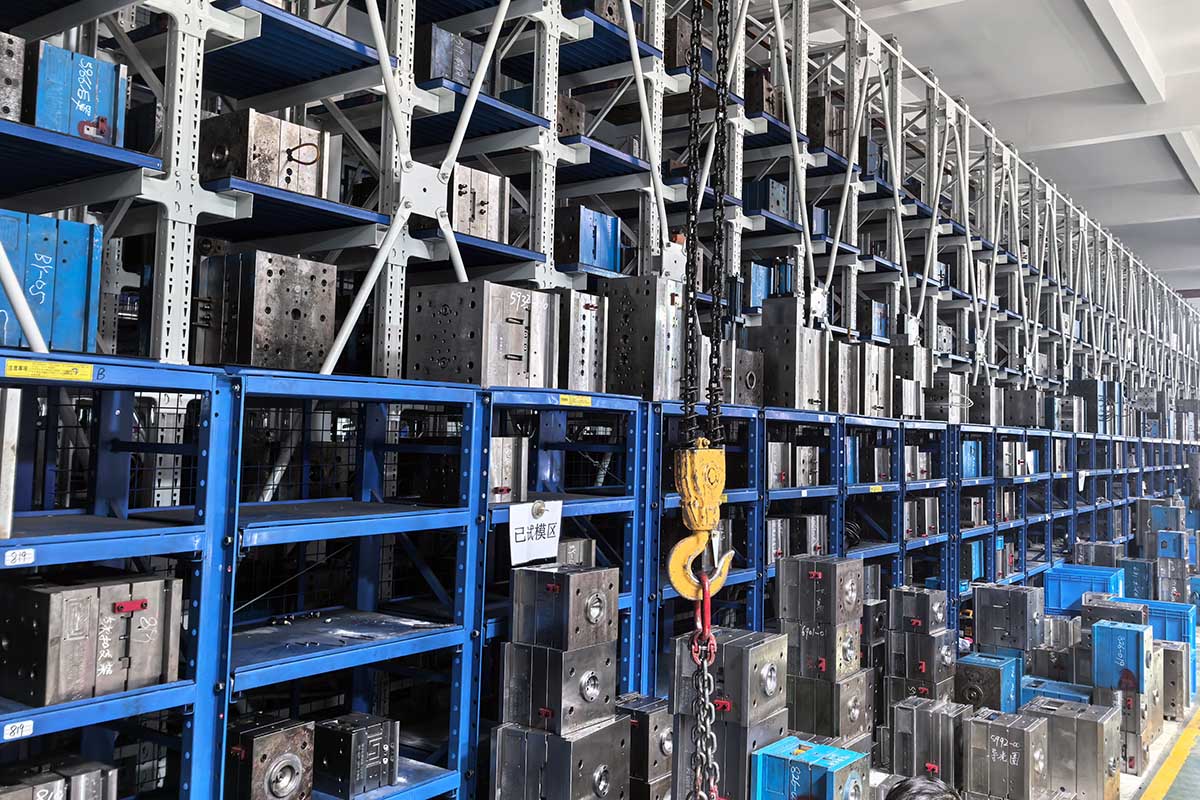
3. Equipment Management and Process Control
Below are the precautions to avoid producing low-quality products that have been verified through extensive practical experience:
- Temperature control: The temperature of the barrel should be adjusted according to the hardness (for 60A-70A, it is recommended to set it at 180-200℃; for 90A-98A, it is recommended to set it at 200-220℃), and the mold temperature should be maintained at 40-60℃ to reduce internal heat.
- Equipment cleaning: TPU is highly sensitive to contamination. Before production, clean the machine and the mold thoroughly with PE materials to avoid residual impurities such as oil stains and dirt that may affect the purity of the material.
Our company provides free on-site guiding suggestions to customers who engage in two-color injection molding to create a win-win situation and achieve mutually beneficial outcomes.
Conclusion
Choosing Bayer TPU for two-color injection molding is not just a material decision—it is a production reliability decision. As a trustworthy and experienced injection molding manufacturer, Kingstar has integrated these principles into our DFM (Design for Manufacturing) process for every TPU two-shot injection molding project. From material recommendation and shrinkage calculation to mold design and on-site trial support, we help engineers make the right choices.
Ready to move forward? Contact us at sales@kingstarmold.com for professional suggestions on TPU selection for your project.
Frequently Asked Questions
References
- Covestro AG. Desmopan® & Texin®: Thermoplastic Polyurethane Processing Guide. https://solutions.covestro.com/en/brands/desmopan
- MatWeb Material Property Database. Bayer Texin® & Desmopan® TPU grades. https://www.matweb.com

Boasts more than 20 years of professional experience in the manufacturing industry, with profound expertise in injection molding and mold building. Possesses comprehensive technical capabilities covering mold design, processing and molding optimization, providing reliable technical support for product development and production.