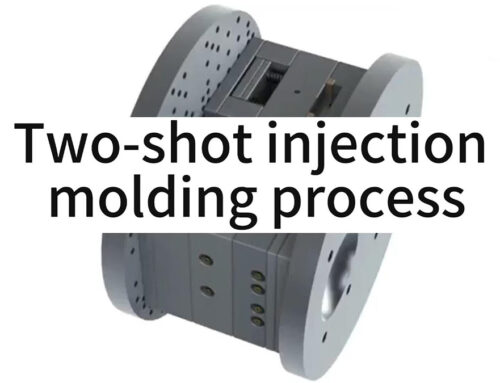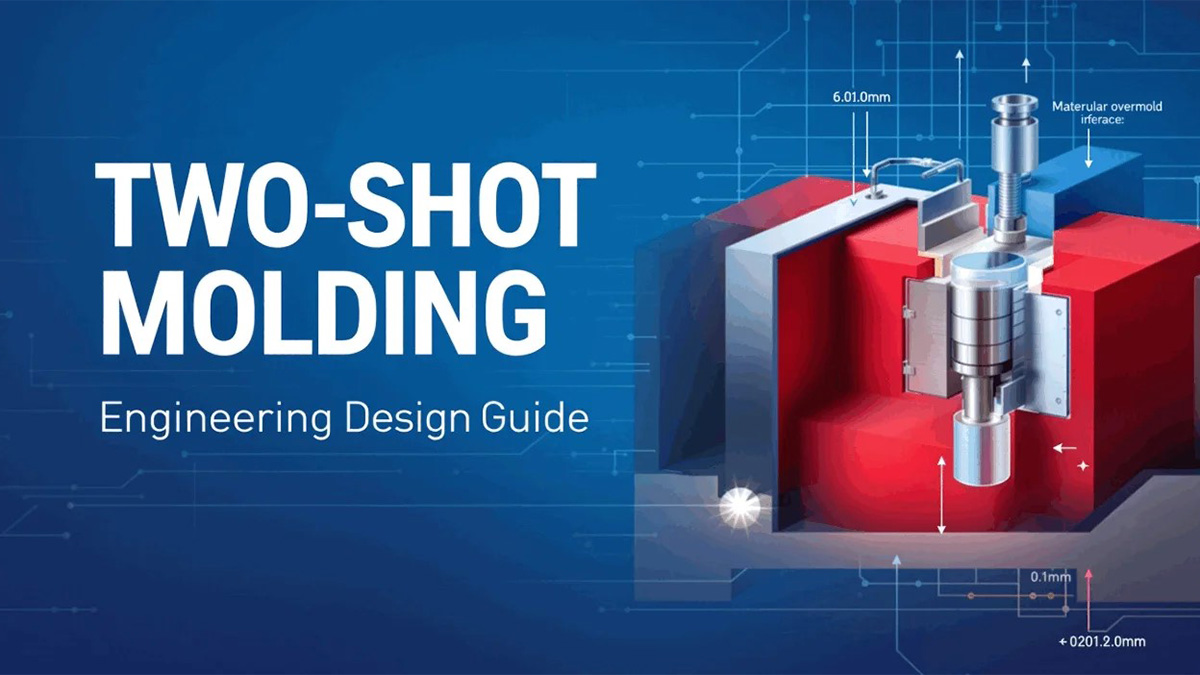
In the field of modern injection molding, two-shot injection molds have become the core equipment for high-end product production due to their ability to achieve dual optimization of product functionality and appearance. With its advantages of high precision, excellent structure, and high added value, it is widely used in multiple industries such as electronics and automotive. It is an indispensable and important technical direction in mold design and manufacturing.
1.1 Core Advantages of Two-shot Injection Molded Products
Two-shot injection molded products have gained increasing recognition for their superior structure and appearance compared to traditional injection molding. Their core advantages are as follows:
1) High precision and stable quality of the product;
2) Good structural strength and durability;
3) Small clearance and good appearance effect;
4) They can both reduce production costs and enhance products’ added value.
1.2 Two-Shot Injection Molding Application Scenarios
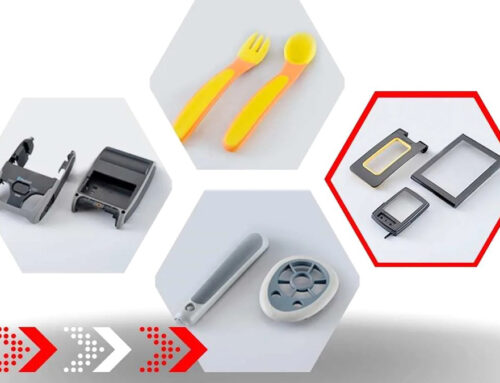
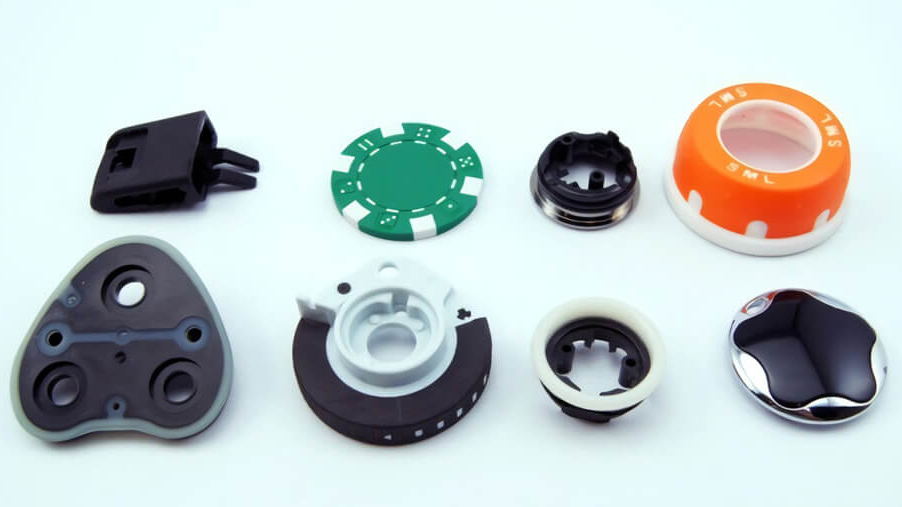
Two-shot injection molding can be divided into two-color molding and color-mixing molding. According to actual application needs, they can be specifically divided into the following five situations:
- Meet Product Functional Requirements: Such as power switches, mobile phone buttons, car switches, etc., which require the LED to partially transmit light;
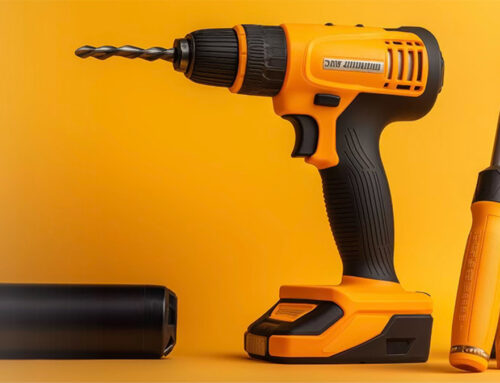
- Improve Product Feel: Some handheld terminals are made of plastic material, which can provide a more comfortable grip experience;
- Adapt to Partial Electroplating Requirements: Commonly used for mobile phone buttons, use ABS material for parts that require electroplating, and choose PC or other suitable materials for parts that do not require electroplating;
- Enhance Product Aesthetics: For example, the logo on the two-color buttons and exterior parts not only has a beautiful appearance, but also avoids the label from falling off due to friction;
- Achieve Integrated Molding: For example, electronic products such as mobile phones, MP3, MP4 players, etc., their product covers and windows can be molded together through two-shot injection molding.
2. Principle of Two-shot Injection Molding
2.1 Core Process of Two-shot Injection Molding
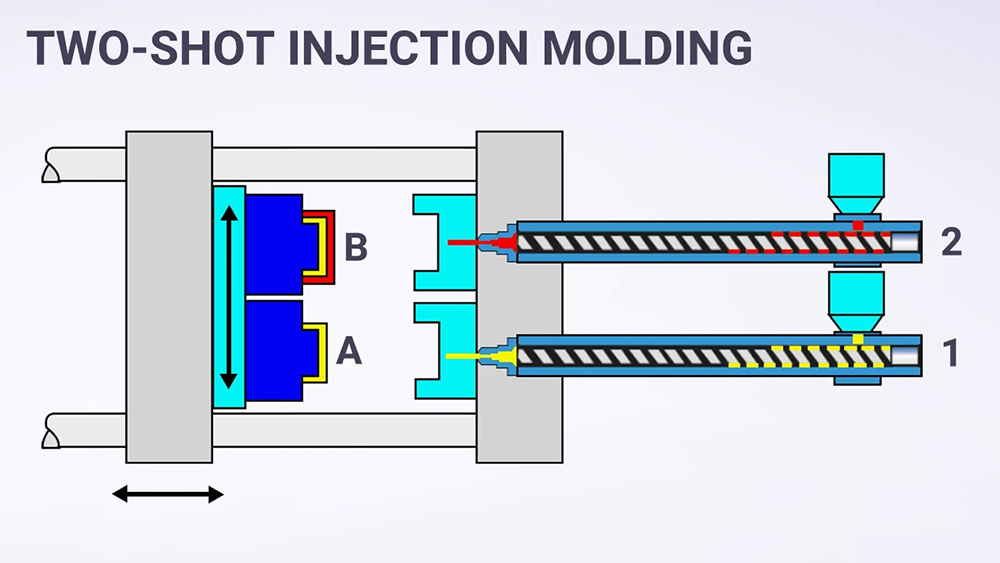
Two-color injection molding primarily involves a two-color injection molding machine with two barrels cooperating with two sets of molds to produce the product through two sequential injection stages. The specific working steps are as follows:
1) Material A is injected from Barrel A into the first-stage mold to form the first-shot product A;
2) After completing the first injection molding cycle, the mold opens. Product A remains on the core mold. The molding machine rotates the template to position B before closing the mold;
3) Material B is injected from Barrel B into the second-stage mold to form the two-shot finished product. Finally, the mold opens and the product is ejected.
2.2 Characteristics of the Two-shot Injection Molding Cycle
The fixed mold (at the nozzle) remains stationary. After the first injection molding and cooling, the runner of the first-shot product will automatically cut off. Then, the moving mold then rotates from the Barrel A position to the Barrel B position for the second injection. After cooling, the product is ejected, completing one finished product production cycle. The moving mold parts of the two sets of molds have the same structure, while the stationary mold halves differ. During the first injection molding, only Barrel A injects raw materials, Barrel B does not work. After one rotation, the complete molding cycle begins.
2.3 Mold Types
Two-shot injection molds can be divided into separate molds and integrated molds according to different mold bases. The main differences between the two are as follows:
- Separate Molds: For two-color or multi-color molds, there are as many mold base sets as there are colors (i.e., the first-stage and second-stage molds are set up separately, containing two or more independent mold bases).
- Integrated Molds: For two-shot molds with complex structure, when the wall thickness between the two shots partially interlock, it needs to use a special structure (transfer shaft) for exchange. So two sets of molds must be placed in the same mold base to meet the structural molding requirements (that is, an integrated mold only contains one set of mold base).
3. Material Choice for Two-Shot Injection Molding
3.1 Material Selection Principles
3.2 Selection of Shrinkage Rate
Generally speaking, the shrinkage rate of two-shot molds depends on the first-shot material. The second-shot material needs to use the same shrinkage rate as the primary material. For example, when the first-shot material is ABS (usually with a shrinkage rate of 0.5%) and the second-shot material is TPR (usually with a shrinkage rate of 1.7%), in two-shot mold forming, the actual shrinkage of the second-shot material is relatively small, and a shrinkage rate of 0.5% is usually selected for design.
4. Division of First/Secondary Shots and Key Design Points
4.1 Requirements for Dividing First/Secondary Shots
1) The appropriate wall thickness should consider materials flowability: If the second-shot wall thickness is too thin, it can easily lead to defects such as short shots and weld lines;
2) The wall thickness of the first shot should ensure no sink marks appear in the first-stage product to prevent flash during the second injection;
3) By appropriately modifying the structure of the mold for first molding, adjusting the flow direction and speed of the second-shot material. Injection defects can be eliminated, or defective defects can be transferred to non appearance surfaces.
4.2 Selection of Gate Location
Priority should be given to selecting submarine gates or pinpoint gates to ensure that the product and runner can be cut off;
The second-shot gate design is based on the premise of not affecting the appearance of the product. Common designs involve using the first-shot parting line and secondary submarine gates.
4.3 Preload Design
Usually, the second-shot stationary mold is required to compress and seal the first-shot product. In general, the theoretical value of the preload height is 0-0.05mm, and the width is not less than 0.2mm.
5. What’s the Difference Between Two-shot Injection Molding and Overmolding?
5.1 Two-shot Injection Molding
Two plastic materials are injection molded on the same injection molding machine in two stages, but the product is only molded once. This molding process, also known as two-material injection molding. It is usually completed by a set of molds and requires specialized two-shot injection molding machines.
(1) Basic Design Principles
Hard plastic makes the first shot, soft plastic makes the second shot;
Transparent materials make the first shot, non transparent materials make the second shot;
Plastic with high injection molding temperature is used for the first shot, and the plastic with low molding temperature is used for the second shot.
Additionally, try to use butt joint sealing instead of interlocks for sealing (in most cases, the hard plastic part of the product is injected first, and then the soft plastic part is injected, as the soft plastic is prone to deformation). For example, when ABS/PC, ABS/PC/ABS, ABS/PMMA two-shot injection molding, it is necessary to first inject PC, PC/ABS or PMMA with higher molding temperature; If it is a transparent shell mold, most of them adopt an inverted mold structure.
(2) Advantages and disadvantages
- Advantages: Fast molding cycle, more aesthetically pleasing product appearance, and the ability to process precision two-shot or even multi-shot (multi-shot or multi material injection molding requires the addition of corresponding material barrels and screw plasticizing devices) products; For products with bonding difficulty (such as hard PA and soft TPE), the bonding effect of two-shot molding is superior to overmolding;
- Disadvantages: It requires a specialized two-shot injection molding machine, which is much more expensive than ordinary injection molding machines; At the same time, the complex structure of the mold results in relatively high mold costs.
5.2 Overmolding
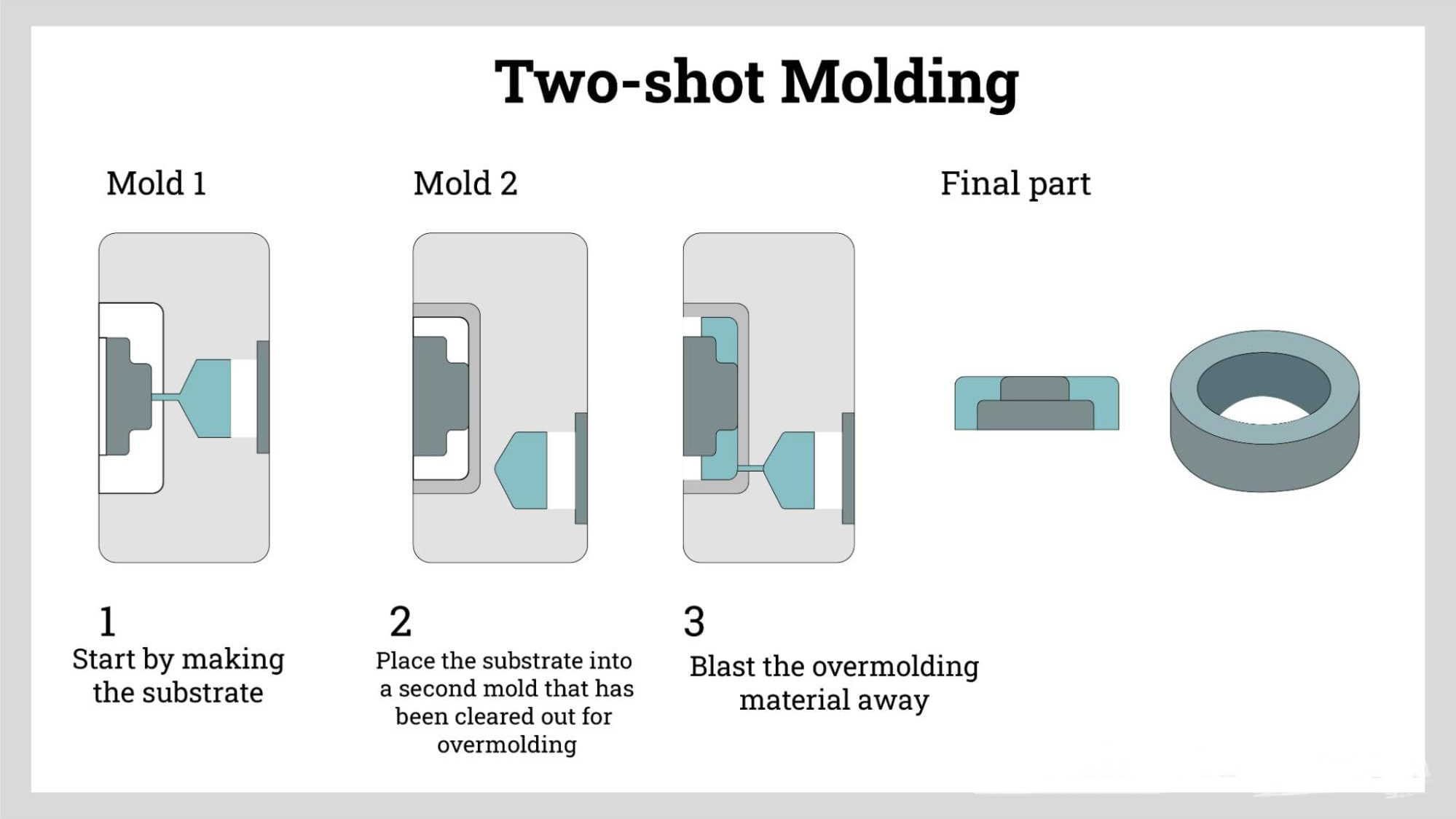
Two plastic materials may not necessarily be injected on the same machine, but are molded in two stages: the product is removed from the first set of molds and then placed in a second set of molds for the second injection molding. This process involves two sets of molds, without the need for specialized two-shot injection molding machine. The overmolding mold is mainly used in the scenario of soft plastic over hard plastic, where soft plastics commonly use artificial rubber, TPE, TPU, TPR and other rubber materials, while hard rubber can be made of materials such as ABS, PC, PP, etc.
(1) Key Design Requirements
The two shapes of the front mold are different, forming a product separately, while the two shapes of the rear mold are completely identical;
The front and rear molds of the mold must be able to accurately match after rotating 180 ° from the center, and this inspection action must be strictly carried out during design.
(2) Advantages and Disadvantages
- Advantages: Ordinary injection molding machines can be used for molding processing, with relatively low equipment investment;
- Disadvantages: Not suitable for precision injection molding of dual material and multi material injection molded products; The molding processing cycle is relatively long, and the production efficiency is lower than that of two-shot molds; The recommended difference in melting point temperature between the two materials is generally 60 ℃, which can be adjusted according to the actual situation. It is recommended to maintain a melting point temperature difference of at least 30 ℃.
6. Common Issues During Injection Molding
6.1 Flash
Main reasons for flash during the opening of two-shot molds are:
1) Insufficient preload at the preload area of the mold inserts;
2) Poor molding conditions result in incomplete filling of the finished product after the first-shot injection;
3) Insufficient size of the mold core during first-shot, resulting in insufficient thickness of the finished product;
4) If soft materials such as PU and TPE are used for second-shot injection, it may be due to excessively high material and mold temperatures.
6.2 Pronounced Weld Lines
The main reasons for the obvious weld lines during the opening of the two-shot mold are:
1) The mold lacks an venting structure or there is insufficient venting;
2) Unreasonable design of gate position;
3) Poor molding conditions, such as low material temperature and mold temperature, low injection pressure and rate, etc.
6.3 Product Cracking
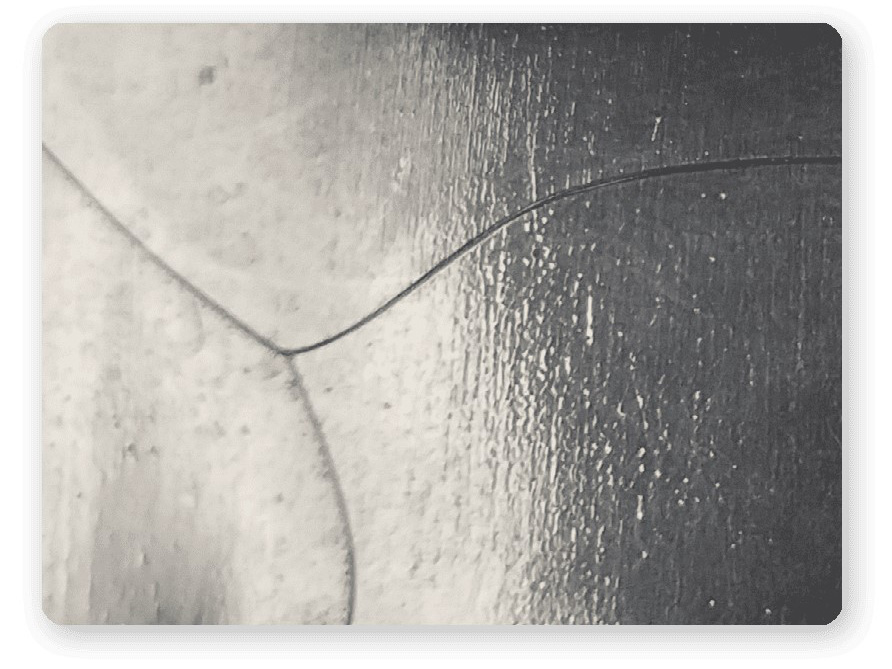
The main factors that cause cracking in two-shot mold injection molded products are:
- Temperature: This process requires the plastic to be processed in a molten state, with strict environmental temperature requirements. Excessive temperature can cause the melt to become too soft, lose its toughness, and be prone to brittle cracking; At the same time, high temperature can cause degradation inside the melt, fracture of plastic molecular structure, and trigger internal diffusion cracking;
- Filling Speed: It is usually necessary to meet the cavity filling requirements of plastic molds at the fastest speed. If the filling speed is too slow, it can easily lead to product rupture;
- Pressure: During the injection molding process, if the processing pressure is too high, the speed is too fast, the material is filled too much, or the injection and holding time is too long, it will cause excessive internal stress in the product, which can lead to cracking;
- Mold: Improper use of molds can also lead to product cracking. For example, try to minimize the use of metal inserts and avoid increasing internal stress caused by different shrinkage rates between the inserts and the parts; The ejector mechanism needs to be designed in a balanced manner, with sufficient number and cross-sectional area of ejector pins, a standard demolding slope, and a sufficiently smooth cavity surface to prevent residual stress concentration caused by external forces, which may lead to product cracking.
The main factors that cause cracking in two-shot mold injection molded products are:
- Temperature: This process requires the plastic to be processed in a molten state, with strict environmental temperature requirements. Excessive temperature can cause the melt to become too soft, lose its toughness, and be prone to brittle cracking; At the same time, high temperature can cause degradation inside the melt, fracture of plastic molecular structure, and trigger internal diffusion cracking;
- Filling Speed: It is usually necessary to meet the cavity filling requirements of plastic molds at the fastest speed. If the filling speed is too slow, it can easily lead to product rupture;
- Pressure: During the injection molding process, if the processing pressure is too high, the speed is too fast, the material is filled too much, or the injection and holding time is too long, it will cause excessive internal stress in the product, which can lead to cracking;
- Mold: Improper use of molds can also lead to product cracking. For example, try to minimize the use of metal inserts and avoid increasing internal stress caused by different shrinkage rates between the inserts and the parts; The ejector mechanism needs to be designed in a balanced manner, with sufficient number and cross-sectional area of ejector pins, a standard demolding slope, and a sufficiently smooth cavity surface to prevent residual stress concentration caused by external forces, which may lead to product cracking.
Two-shot injection molding integrates multiple technical points such as material selection, structural design, and process control. Mastering its core knowledge is the key to improving product quality and production efficiency. With the upgrading of the manufacturing industry, its application scenarios will continue to expand, providing a broader space for product innovation.
KingStar, a reliable one-stop custom manufacturer with solid technology and rich experience in the field of two-shot injection molds, capable of providing reliable customized solutions. If you are sourcing custom plastic part manufacturer or want to get consulting on technical issues, please feel free to contact us at sales@kingstarmold.com at any time.