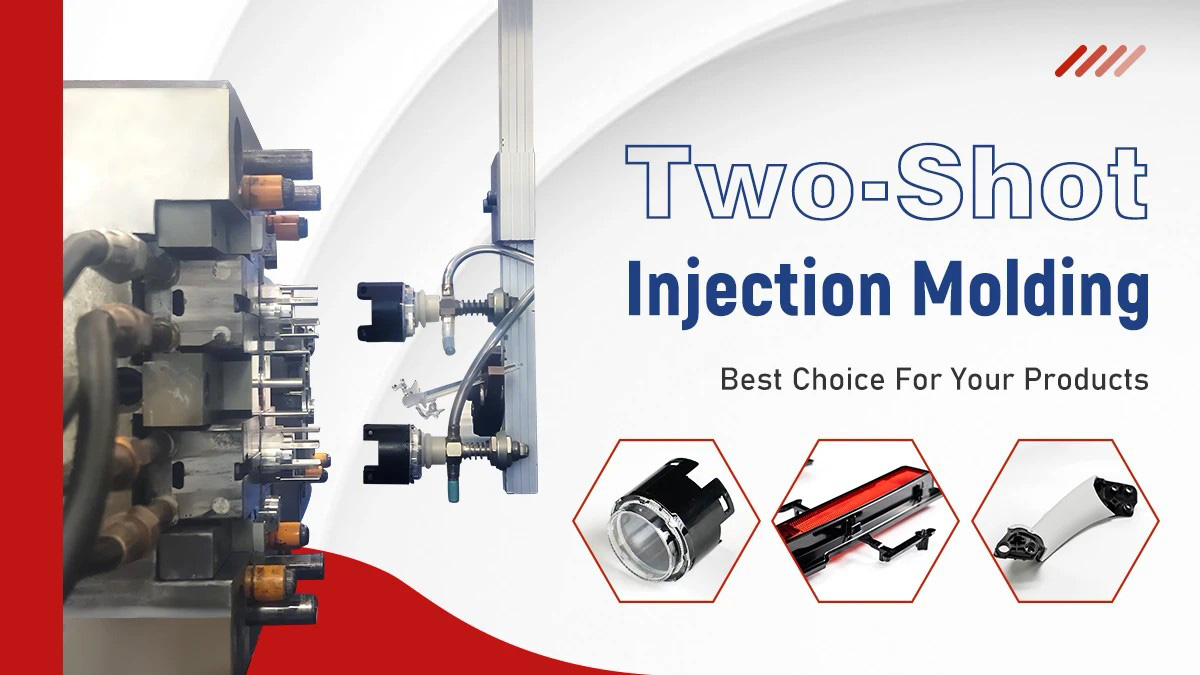
Under the trend of upgrading plastic products towards multifunctionality, high aesthetics, and integration, two-shot injection molding technology has become a key molding technology in fields such as automotive interiors, consumer electronics, and medical equipment, relying on its core advantage of “forming composite structures in one cycle”. As the core carrier of this process, the design quality of two-shot molds directly determines the product molding effect, production efficiency, and overall cost.
KingStar, a leading injection molding company with years of expertise in two-shot injection molding, next we will present the 3 core principles and 6 key considerations for two-shot mold design.
Two-Shot injection molding technology achieves integrated molding of two different colors or materials of plastic on the same injection molding machine through the collaborative operation of “dual injection units+switchable molds”, without the need for secondary processing. The standard process is divided into four steps: 1) Inject and solidify the base material; 2) Transfer the base part via mold rotation (180°) or shifting; 3) Inject and fuse the second material; 4) Open mold and eject the integrated part.
Core advantages of this technology are in multiple dimensions: product bonding strength ≥3.5N/mm, peeling rate ≤1.5%; Material utilization rate has increased to over 95%, and overall production cost has reduced by 20%-25%; Positioning accuracy of the mold is ± 0.01mm, and dimensional tolerance of the product meets ISO 2768 fine grade. Applications include electric toothbrushes (ABS+TPE anti slip handle), car lights (PC transparent lens+PP sealing base), mobile phone buttons (PMMA transparent characters+ABS matte base).
2. 3 Core Principles of Two-Shot Mold Design
2.1 Principle of Compatibility and Adaptation
The two materials need to meet the requirements of close melting temperature (difference ≤ 30℃) and shrinkage rate (difference ≤ 0.5%) to avoid degradation or warping of high-temperature materials after molding. Priority should be given to selecting mature industry adaptation combinations, such as ABS+TPU for automotive interiors, PC+PMMA for electronic casings, and PP+TPE for daily necessities. Incompatible material combinations require the addition of 3%-5% compatibilizers or the enhancement of mechanical interlock through interface microstructure design.
2.2 Principle of Accuracy Synergy
Precision of mold processing needs to be controlled within ±0.02mm to ensure strict alignment between the first and second shot cavities. Adopting a rotating or translational structural design, the switching time of the rotating mold is ≤5 seconds, and the positioning repeatability accuracy is ±0.005mm (suitable for small and medium-sized products); The load capacity of the translational mold can reach over 50kg (suitable for large products). Ejection systems need to take into account the molding properties of both materials to avoid scratches or deformation during demolding.
2.3 Principle of Efficiency Optimization
The cooling system requires differentiated cooling channels, and the temperature difference between the two cavities should within ±2 ℃ to avoid poor material fusion. Cooling lines should be 15-25 mm from the cavity surface with flow velocity of 1-3 m/s for balance. Balance. Runner design needs to match the flowability of two materials, such as when ABS and TPU are combined, the difference in runner diameter should be ≤ 1mm.
3. 6 Key Considerations in Two-Shot Mold Design
- Clarify Molding Sequence: Based on the product structure and material properties, determine the injection sequence for the base material and composite material, with priority given to injecting hard materials with strong structural support.
- Optimization of Gate Position: Avoid the gate facing the joint surface of two materials to prevent interface peeling caused by melt impact. The flow state of the melt can be improved by adding auxiliary gates.
- Venting System Design: Vent depth should be 0.01-0.02mm, and overflow grooves in key areas to avoid bubbles or short shots during melt filling.
- Shrinkage Compensation: For the difference in shrinkage between two materials, a corresponding compensation amount is reserved in the mold design, or the shrinkage effect is offset by adjusting the process parameters.
- Surface Quality Control: Polishing accuracy of the key appearance surface of the mold should reach Ra ≤ 0.02 μm to avoid scratches or uneven gloss on the surface of the product after molding.
- Structural Simplification and Adaptation: Product design should avoid complex deep cavities or inverted structures to facilitate mold cavity processing and product demolding, while reducing melt filling resistance.
4. Matching of Key Process Parameters
1. Temperature Control: Set temperature of the material barrel according to the properties of the material. The temperature of the first shot material should be slightly lower than that of the second shot to ensure good welding at the interface. The overall temperature of the mold is 60-90℃, the temperature of the hard material cavity is 60-80℃, the temperature of the soft material cavity is 40-60℃, and the temperature difference is strictly controlled within ± 2℃.
2. Pressure and Speed Control: First shot: 80-120 MPa; Second shot: 100-140 MPa (slightly higher for better contact). Injection speed: 50-80 mm/s, using multi-stage injection for complex geometry to avoid displacing the substrate or causing flash.
3. Pressure Holding and Cooling Time: First holding pressure for 15-25 seconds, second holding pressure for 20-30 seconds to reduce shrinkage defects. Cooling time needs to be accurately calculated based on the thickness of the product to avoid deformation caused by insufficient cooling or production efficiency affected by excessive cooling. It is usually extended by 10%-20% compared to single shot molding.
5. Design and Production Implementation Advice
- Material Pre-treatment: Dry moisture absorbing materials such as ABS and PC in advance at a temperature of 80-120 ℃ for 4-6 hours to ensure that the moisture content is below 0.02%.
- Full Process QC: Establish a full process inspection system for interface adhesion (according to ASTM D903 standard), dimensional accuracy, and appearance defects, and control the defect rate within 2%.
- Smart Adaptation: Utilize smart injection molding technology, real-time monitoring of injection pressure, temperature and other parameters.
- Cost Optimization: By eliminating assembly, printing and other processes through integrated design, labor costs can be reduced by more than 50%. For example, the logo of the Bluetooth earphone shell can be directly formed, replacing screen printing technology.
The dual color mold design needs to take into account the synergistic adaptation of material characteristics, mold structure, and process parameters, with the core being “source control compatibility, process control accuracy, and overall optimization efficiency”. Mastering the above technical points can fully leverage the advantages of dual color injection molding technology and provide quality assurance for the production of high-end composite plastic products.
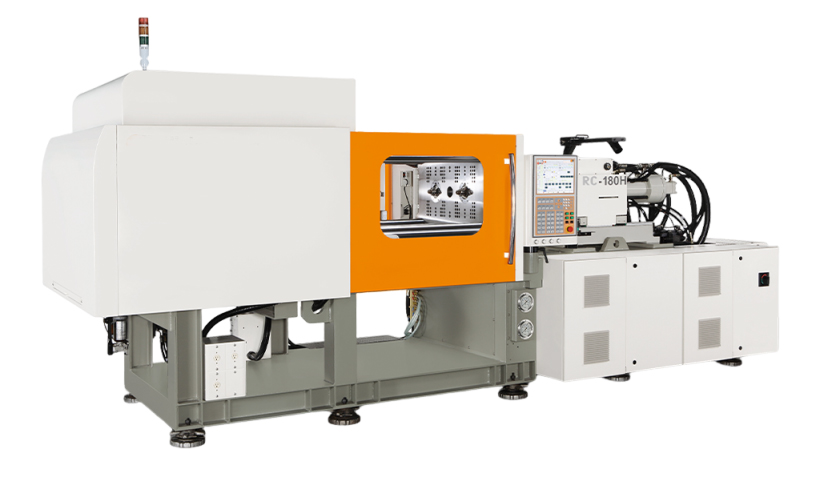
If you have requirements for two-shot mold design, customized development, or mass production, please feel free to contact KingStar at sales@kingstarmold.com or leave an online message! We have a professional team and a full range of two-shot injection molding equipment, providing one-stop manufacturing services from solution design to mass production implementation.