As a leading manufacturer of plastic parts, we often receive inquiries about how to perform TPE & TPR injection molding troubleshooting. In this article, we will focus on the entire injection molding process, identify key operational points and common issues, and provide clear guidance for production operations.
TPR (thermoplastic rubber) and TPE (thermoplastic elastomer) are widely used in fields such as automotive parts, electronic casings, and daily necessities due to their excellent flexibility and processing adaptability. Injection molding, as its core processing method, the control of process details directly affects the stability of product quality.
1.1 Material Drying Treatment
TPR pellets are prone to absorbing low molecular weight volatiles such as moisture and residual solvents during storage and transportation, especially moisture absorbing TPR. Excessive moisture content can cause defects such as bubbles and silver lines in the product, so drying treatment must be carried out before processing.
- Drying Process: A vacuum drying oven is used with a set temperature of 75 ℃-90 ℃ and a drying time of 2 hours to ensure that the moisture content of the material is controlled below 5%. High precision products must be strictly controlled within 2%-3%;
- Post-drying Storage: Dried material needs to be sealed and stored. It is recommended to equip a drying chamber hopper, which can continuously supply dry hot materials to the injection molding machine. This can not only avoid secondary moisture absorption, but also simplify operation, maintain material cleanliness, and improve injection rate. The recommended loading amount for the drying hopper is 2.5 times the hourly material consumption of the injection molding machine.
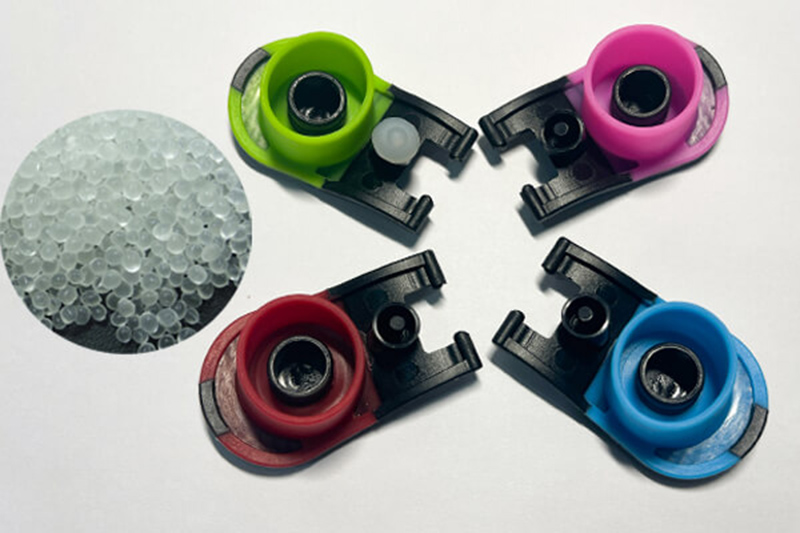
1.2 Coloring Techniques: Masterbatch Selection for SBS vs. SEBS
TPE based on SBC has better coloring performance than most TPR materials, requiring only a small amount of color masterbatch to achieve pure color and more uniform color distribution. When dyeing, the appropriate color carrier should be selected according to the substrate type:
- SBS based TPE: It is recommended to use polystyrene based color carriers;
- Hard SEBS based TPE: Compatible with polypropylene (PP) color carrier;
- Softer SEBS based TPE: Low density polyethylene or ethylene vinyl acetate copolymer can be used, and PP color carrier is not recommended to avoid affecting the hardness of the composite material;
- For overmolding/insert molding applications: Avoid using polyethylene (PE) colorants, which may reduce the adhesion with the substrate;
- Core principle: The viscosity of the color masterbatch should be lower than the TPR viscosity, and the higher melt index of TPR should be used to promote dispersion and ensure uniform dyeing.
1.3 Requirements for Barrel Cleaning
When using a new injection molding machine for the first time, changing products/raw materials/colors during production, or discovering plastic decomposition, the barrel should be cleaned in a timely manner to avoid residual materials affecting product quality:
Cleaning method: The heating barrel cleaning method is used, and the cleaning material is preferably new materials to be processed or recycled plastic materials. For TPR materials, the transition cleaning material can be directly replaced with new materials to complete the barrel cleaning.
2. Optimizing TPR/TPE Injection Parameters
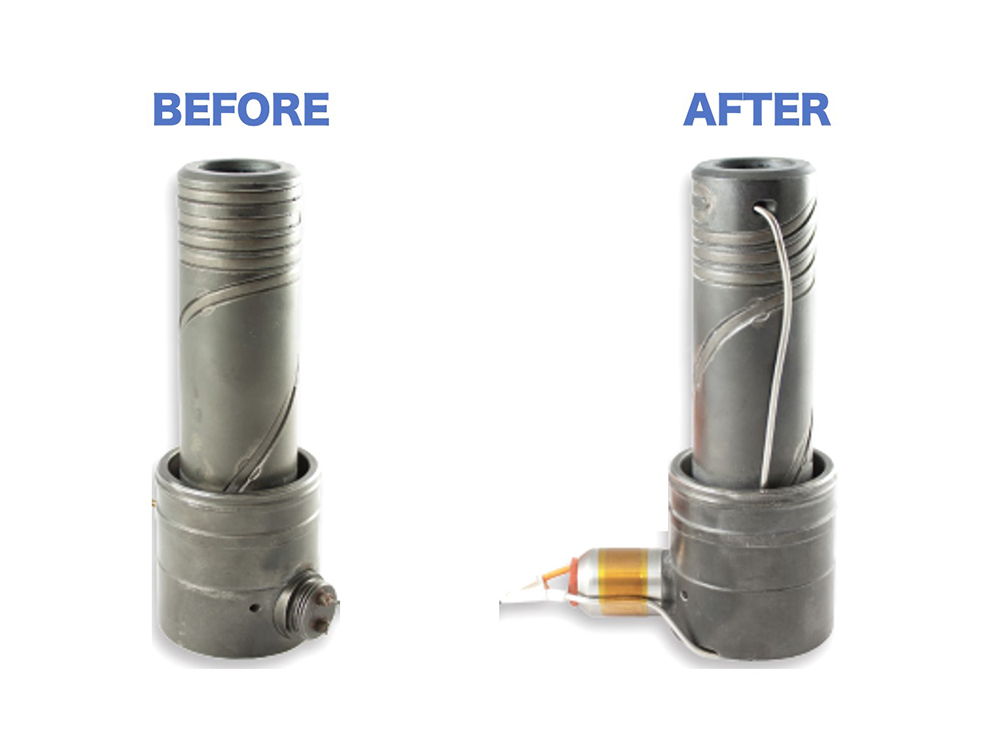
2.1 Temperature Parameter Control
The temperature setting is the key to determining the appearance and performance of the product, and needs to be precisely controlled according to different regions:
- Barrel temperature: 160 ℃-210 ℃, with a lower temperature in the feeding area to prevent blockage of the feeding port and facilitate the discharge of entrained air; The temperature in the transition zone should be higher than the melting point of the color masterbatch to optimize the mixing effect;
- Nozzle temperature: 180 ℃-230 ℃, close to the required temperature of the melt to ensure smooth material injection;
- Mold temperature: 30 ℃-40 ℃, higher than the condensation temperature in the injection molding area to avoid water contamination of the mold and the appearance of stripes on the surface of the product; Although higher mold temperatures can prolong the cycle period, they can improve the quality of the welding line and the appearance of the product.
2.2 Filling, Pressure Holding and Cooling Process
(1) Filling Performance Optimization
If the product has problems such as excessive pressure drop, long filling time, or short shots, the following methods can be used to improve it:
1) Replace another series of compatible products from Keyue;
2) Adjust the gate position and optimize the melt flow path;
3) Change injection pressure to enhance filling power;
4) Adjust the geometric shape of the parts to reduce filling resistance.
(2) Pressure Holding Parameter Setting
Injection pressure control is divided into primary injection pressure, second injection pressure (holding pressure), or multiple injection pressures, and the timing of pressure switching directly affects product quality:
- Holding pressure and speed: It is 50% -65% of the highest value during the filling stage, which means that the holding pressure is 0.6-0.8MPa lower than the injection pressure. This can not only reduce the load on the oil pump, extend its service life, reduce power consumption, but also avoid material overflow caused by excessive pressure inside the mold;
- Process technique: After filling the mold, the holding pressure can be reduced first, and then raised again after a certain thickness forms on the surface of the product. It is suitable for forming thick walled large products and can eliminate collapse pits and flying edges; Near the end of the injection stroke, a small amount of molten material (slow impulse) should remain at the end of the screw. Apply second or third injection pressure according to the filling situations in molds to supplement the molten material to adjust the shrinkage rate and prevent indentation;
- Key impact: Under constant molding temperature, holding pressure is the core parameter that determines the size of the product, and holding pressure and temperature are the main variables that affect the dimensional tolerance of the product.
(3) Cooling Time Control
The cooling time mainly depends on the melt temperature, product wall thickness, cooling efficiency, and material hardness:
- Standard Parts: When cooling on both sides, every 0.1 inch (about 0.25cm) wall thickness needs to be cooled for 10-15 seconds;
- Overmolded/Insert Molded Parts: The effective cooling surface area is small, and the cooling time needs to be extended, with 15-25 seconds required for every 0.1 inch wall thickness;
- Material Difference: The harder TPR/TPE solidifies faster in the mold than the softer variety, and the cooling time can be appropriately shortened.
3. Troubleshooting Common TPE/TPR Defects: Causes and Solutions
3.1 How to Fix Short Shots
- Improper adjustment of feed, resulting in shortage or excess of materials;
- Low injection pressure, insufficient injection time, or premature retraction of plunger/screw;
- The injection speed is too slow, and the melt cannot quickly fill the mold cavity;
- The material temperature is too low and the melt flowability is poor.
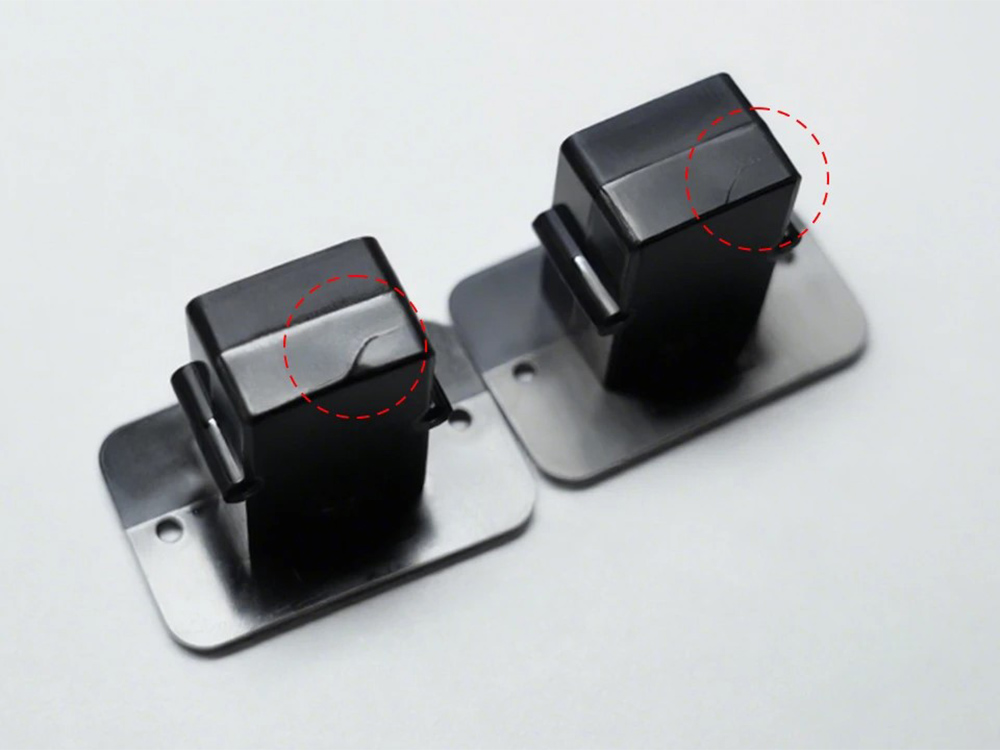
3.2 Overflow (Flash) in TPR/TPE Injection Molding
- The injection pressure is too high or the injection speed is too fast, causing the melt to overflow from the mold cavity;
- The amount of material added is too large, exceeding the load-bearing capacity of the mold cavity;
- Excessive temperature of the barrel, nozzle, or mold can cause a decrease in plastic viscosity and an increase in flowability, leading to material overflow.
3.3 How to Reduce Splay, Bubbles and Voids in TPE/TPR Molding
- The material temperature is too high, causing the material to decompose and produce gas;
- Insufficient injection pressure, short holding time, and insufficient adhesion effect between the melt and the surface of the mold cavity;
- The injection molding speed is too fast, and the molten plastic decomposes under strong shear to produce gas; Or the molding speed is too slow, the cavity filling is not timely, and the surface density is insufficient to produce splays;
- Insufficient material quantity, excessive cushion, low material or mold temperature, affecting the flow of molten material and forming pressure;
- When the screw is pre molded, the back pressure is too low, the speed is too high, the screw retracts too quickly, and air enters the front end of the barrel with the material.
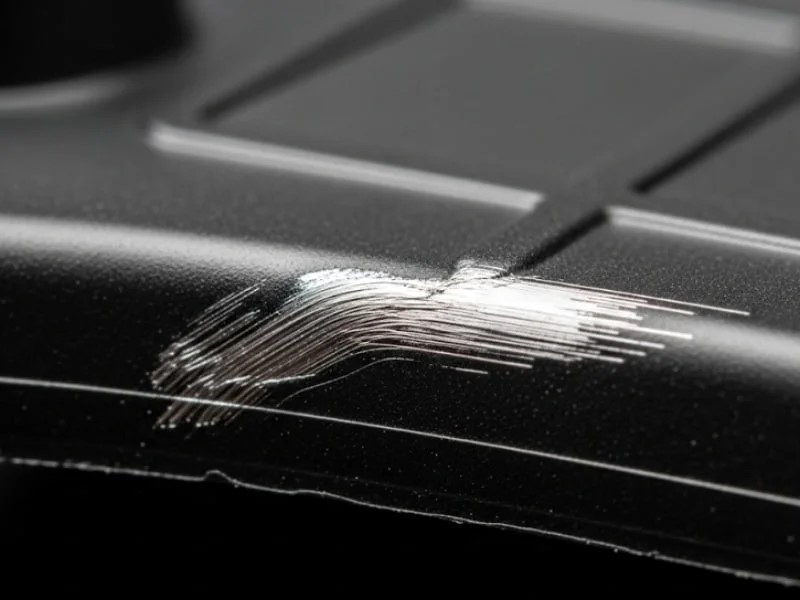
3.4 How to Prevent Burn Marks in Injection Molding
- The temperature of the barrel and nozzle is too high, and the material is excessively decomposed;
- Excessive injection pressure or pre plasticization back pressure;
- The injection speed is too fast, or the injection cycle is too long, and the material is subjected to high temperature and pressure in the mold cavity for a long time.
Conclusion
TPR/TPE/TPU thermoplastic elastomer injection molding is a systematic process, from material pretreatment in the early stage to process parameter setting, and then to defect investigation, each link requires precise control. In actual production, the process should be dynamically adjusted based on the product structure and substrate characteristics, and parameters should be optimized through repeated testing to achieve a dual improvement in product quality and production efficiency. I hope that the process outlined in this article can provide practical reference for industry practitioners and help solve various practical problems in production.
If you have any related injection molding process optimization needs or you are looking for a reliable custom part manufacturer, please feel free to contact us at sales@kingstarmold.com or leave online message. We will reply via emailing within 24 hours.