Custom Manufacturing & Precision Machining Company
SPI Surface Finish Service2025-12-22T21:14:29+00:00

SPI Surface Finish Service

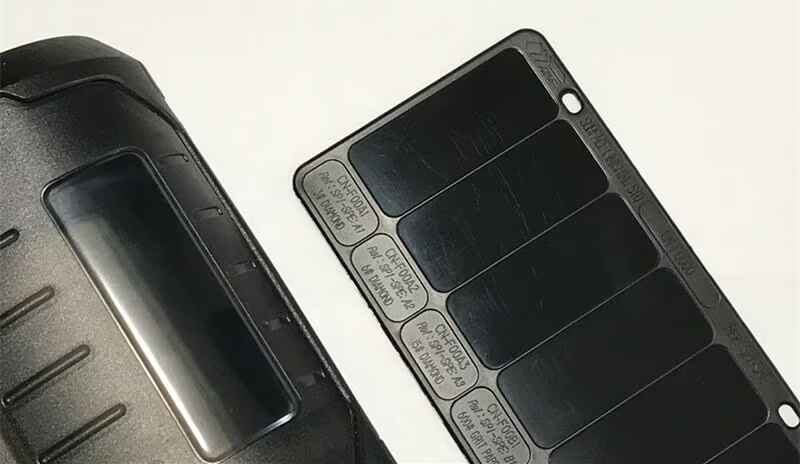
SPI Surface Finish standards define precision from ultra-glossy to rugged textures, ensuring your injection-molded parts meet both aesthetic and functional demands. Partner with us to achieve consistent, high-quality finishes that elevate your product’s appeal and performance.
  • 12 Grades Covered: From A1 (mirror-like) to D3 (heavy texture)
  • Material-Matched Solutions: Optimized finishes for ABS, PC, acrylic, and more
  • SPI Finish Card: Full-set 12-grade reference samples on common plastics

What Is SPI Surface Finish?

SPI Finish

SPI Surface Finish is a set of widely recognized industry standards developed by the Society of the Plastics Industry (SPI) in the United States, specifically designed to define the surface smoothness and texture of injection-molded plastic parts. This standard includes 12 grades from A1 to D3, covering everything from ultra-smooth, high-gloss surfaces (such as the mirror-like effect of grade A1) to rough, textured surfaces (such as the heavy texture of grade D3), providing a clear reference for the surface quality of plastic parts with different requirements.​

It is worth noting that achieving these surface effects is inseparable from the precise processing of metal molds – the mold surfaces are processed through techniques such as diamond polishing, sandpaper grinding, stone grinding, and sandblasting, and finally, the surface state of the mold is accurately “replicated” onto the plastic parts during injection molding. Therefore, SPI Surface Finish essentially measures the surface quality of plastic parts, but the processing technology of the mold is a key prerequisite for meeting this standard, providing reliable consistency guarantees for the appearance design and functional realization of plastic products.

However, SPI Surface Finish usually only involves smoothness and roughness. If your project need to achieve a specific surface effect for your parts (such as coating, coloring, etc.), then a post-surface treatment is required. Our team is equipped with experienced engineers who are capable of customizing surface treatments tailored to your project, whether it’s custom-level SPI mold surface treatment, other post-surface treatment or combined.

Our SPI Surface Finishing Services

matching needs icon

Custom Finish Matching

As part of our one-stop manufacturing service, we align all 12 SPI grades (A1-D3) precisely with your part designs—seamlessly integrating finish specifications into every stage, from initial design support and feasibility testing to prototyping and mass production. Strict quality controls ensure consistent finishes across batches, maintaining uniformity throughout your entire production journey.

sample card icon

Custom SPI Finish Cards

We offer compact reference tools: card size 120×65×2 mm; with each plaque in 40×20mm (default, but the size can be customized according to your needs), and there are over 16 different plastic materials and colors available (please consult us for detailed existing options; also customizable). These cards are suitable for tactile inspection and visual verification, and can simplify the design approval process and ensure the consistency of production.

plastic pellets icon

Material-Specific Optimization

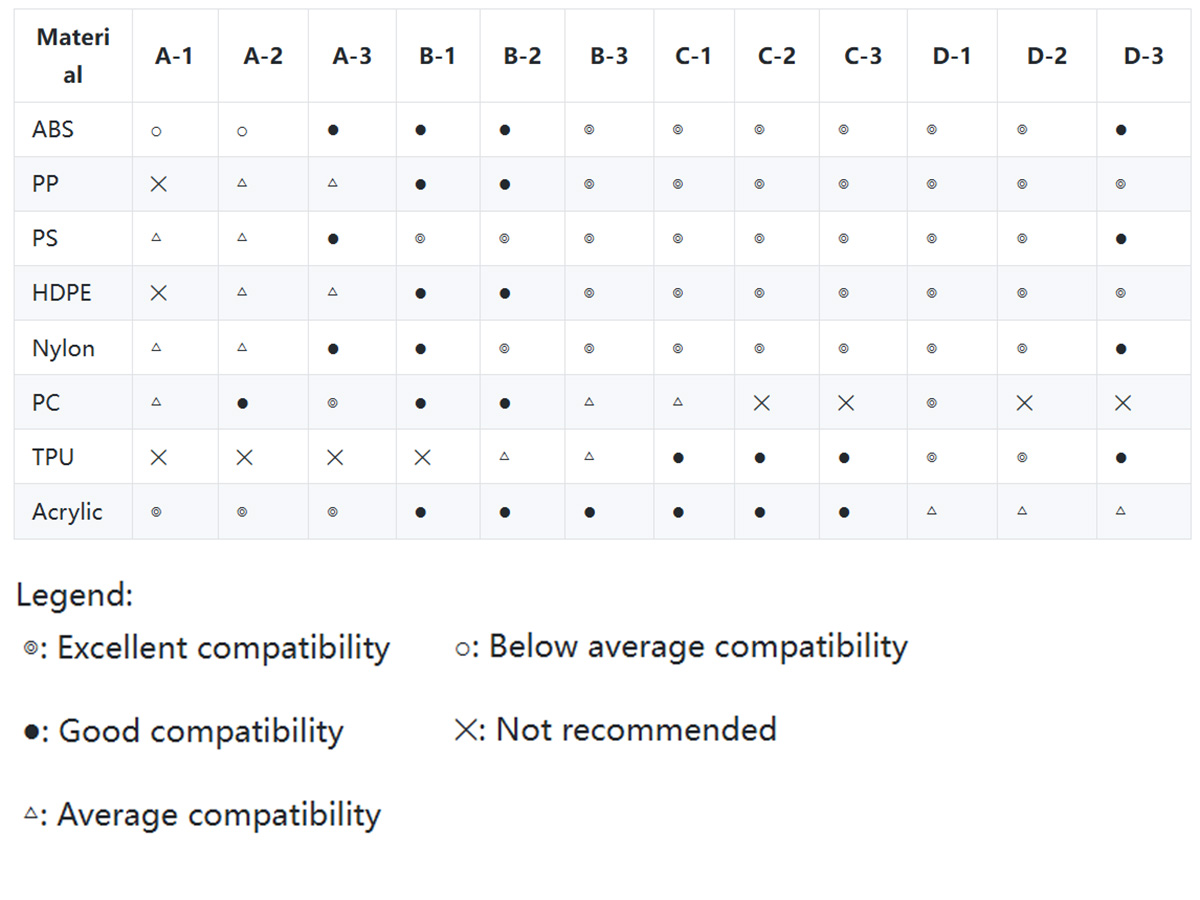
Expert guidance to pair plastics with ideal finishes—from acrylic’s unmatched clarity for A1 gloss to PP’s durability for D3 textures—maximizing both aesthetics and performance. Visit [SPI Surface Finish Grades: Recommended Plastic Materials & Applications] (click to navigate) later this page as a rough reference. For detailed advice, please consult our engineers.

cost effective icon

Cost-Effective Solutions

Tailored strategies to align finishes with your budget and part purpose:

  • For high-end glossy aesthetics (e.g., optical parts), A-series balances premium appeal with higher precision costs.
  • For mid-range visuals (e.g., appliance panels), B/C-series offers economical semi-gloss/matte finishes that hide defects.
  • For textured grip or rugged needs (e.g., handles), D-series provides durable, cost-efficient options from light to heavy textures.

SPI Surface Finish Grades

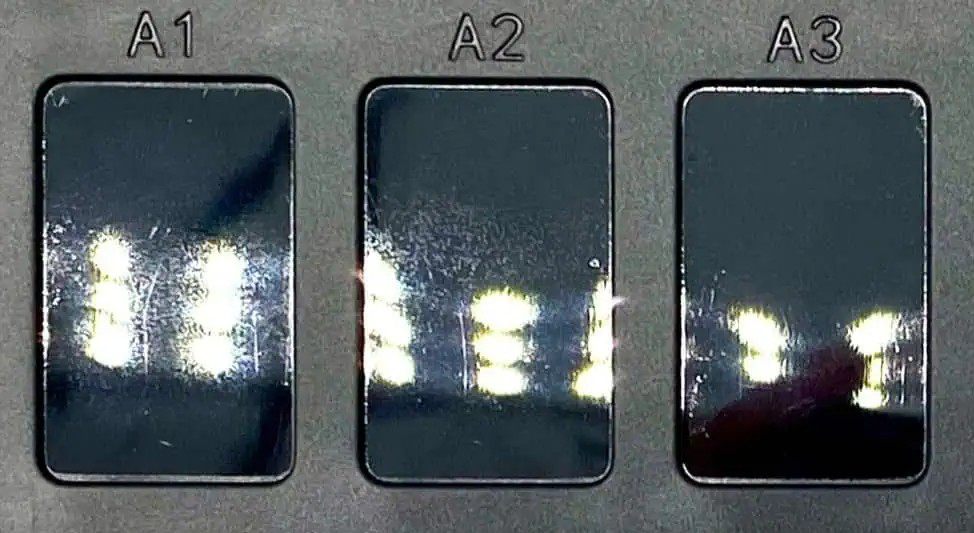
1. Glossy Finishes (A Series)

Designed for high-shine, reflective surfaces where clarity and visual appeal are critical. Achieved through precision diamond buffing for mirror-like smoothness.

SPI GradeSurface CharacteristicPolishing ProcessRa Roughness Range (μm)
A-1High Gloss / Optically Clear; Optically clear with a glass-like finish, ideal for lenses, display covers, and premium cosmetic packagingGrade #3, 6000 Grit Diamond Polish0.012 – 0.025
A-2High Gloss / Transparent; Transparent with minimal distortion, suited for clear casings and light diffusersGrade #6, 3000 Grit Diamond Polish0.025 – 0.05
A-3High Gloss / Transparent; Balances shine and cost for visible parts like appliance panelsGrade #15, 1200 Grit Diamond Polish0.05 – 0.10

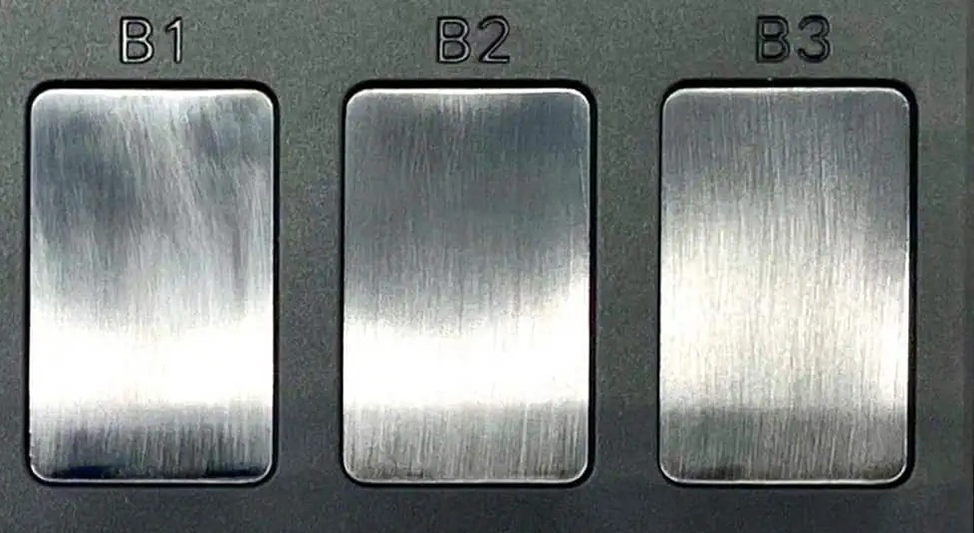
2. Semi-Gloss Finishes (B Series)

Offers moderate sheen with subtle texture, hiding minor defects while maintaining visual polish. Created using progressively coarser grit papers.

SPI GradeSurface DescriptionFinishing TechniqueRa Value Range (μm)
B-1Semi-Glossy – Fine Texture; Smooth to the touch with low reflectivity, perfect for consumer electronics trims600 Grit Sandpaper0.05 – 0.10
B-2Semi-Glossy – Medium Texture; Versatile finish for automotive interiors and household goods400 Grit Sandpaper0.10 – 0.15
B-3Semi-Glossy – Coarse Texture; Cost-effective option for non-critical visible parts like toy components320 Grit Sandpaper0.28 – 0.32

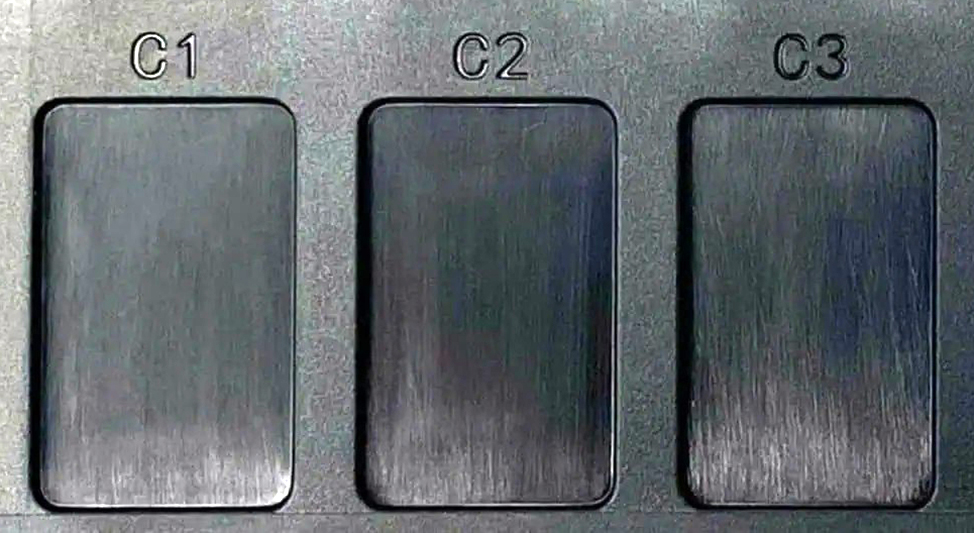
3. Matte Finishes (C Series)

Dull, non-reflective surfaces that excel at hiding imperfections and reducing glare. Produced using stone abrasives for uniform texture.

SPI GradeSurface TypeFinishing ApproachRa Roughness (μm)
C-1Matte – Fine Texture; Smooth yet low-shine, ideal for laptop bodies and medical device housings600 Grit Abrasive Stone0.35 – 0.40
C-2Matte – Medium Texture; Balances grip and aesthetics for tool handles and remote controls400 Grit Abrasive Stone0.45 – 0.55
C-3Matte – Coarse Texture; Durable, low-maintenance finish for industrial enclosures320 Grit Abrasive Stone0.63 – 0.70

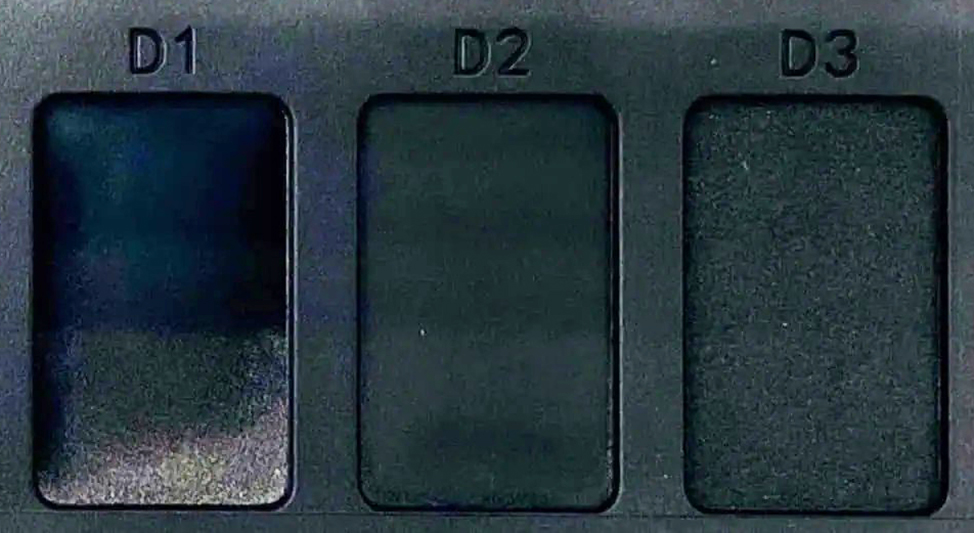
4. Textured Finishes (D Series)

Rough, tactile surfaces designed for grip, wear resistance, and concealing heavy use. Applied via dry blasting with abrasives.

SPI GradeSurface TextureFinishing TechniqueRa Roughness Range (μm)
D-1Light Textured; Subtle grip for everyday items like bottle capsDry Blasting with #11 Glass Beads0.80 – 1.00
D-2Medium Textured; Enhanced durability for industrial tool surfacesDry Blasting with #240 Oxide1.00 – 2.80
D-3Heavy Textured; Maximum grip and damage resistance for heavy machinery partsDry Blasting with #24 Oxide3.20 – 18.0

SPI vs. VDI: Key Differences

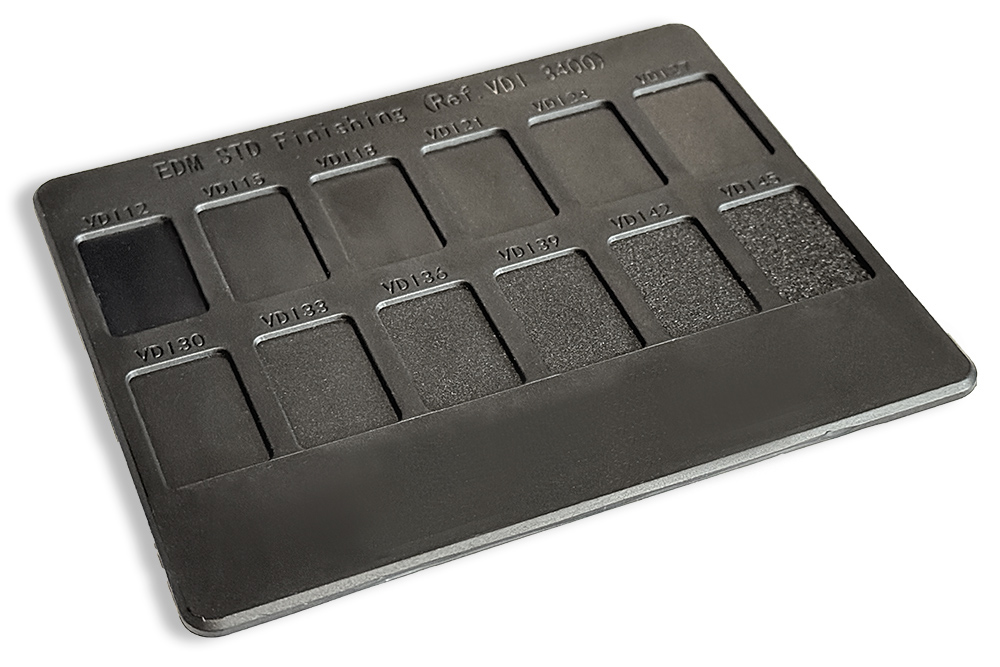
VDI (Verein Deutscher Ingenieure, or German Association of Engineers) surface finish standards focus on quantifying surface roughness and texture through numerical ratings (typically VDI 18 to VDI 60), with higher numbers indicating coarser surfaces. Unlike SPI, which emphasizes aesthetic and functional categorization (glossy, matte, etc.) tied to mold polishing techniques, VDI provides a standardized scale based on measured roughness parameters, making it widely used in industrial manufacturing for specifying texture uniformity, especially in automotive and mechanical components.

FeatureSPI Surface FinishVDI 3400 Finish
FocusAesthetics (gloss, smoothness)Functionality (texture, grip)
Grades12 grades (A1-D3, alphanumeric)45 grades (0-45, numeric)
Finishing MethodsDiamond buffing, grit paper, stone abrasives, dry blastingEDM machining, chemical etching, dry blasting
Regional UseWidely used in the AmericasPredominantly used in Europe
Best ForHigh-gloss, visually critical partsTextured, functional parts (grip, adhesion)

SPI Surface Finish Grades: Recommended Plastic Materials & Applications

SPI Finish CategoryKey GradesBest-Performing MaterialsSuitable MaterialsNot Recommended MaterialsTypical Applications
Glossy (A Series)A1-A3Acrylic (Excellent across all grades)ABS (A3: Good), PC (A3: Excellent), PS (A3: Good), Nylon (A3: Good)PP (A1), HDPE (A1), TPU (all)Lenses, mirrors, clear packaging, high-gloss casings
Semi-Glossy (B Series)B1-B3Polystyrene (Excellent across all grades)ABS (B3: Excellent), PP (B3: Excellent), HDPE (B3: Excellent), Nylon (B3: Excellent)TPU (B1)Appliance panels, clips, medium-shine trims
Matte (C Series)C1-C3ABS, PP, PS, HDPE (Excellent across all grades)Acrylic (Good), TPU (Good)PC (C2-C3)Laptop frames, keyboards, fingerprint-resistant parts
Textured (D Series)D1-D3PP, HDPE (Excellent across all grades)ABS (D1-D2: Excellent), PS (D1-D2: Excellent), TPU (Good)PC (D2-D3)Tool handles, grips, rugged industrial parts

spi finish material and grades

SPI Grade and Applicable Materials

FAQs question mark

Frequently Asked Questions

Besides SPI and VDI, what other mold surface finish standards are commonly used?2025-12-22T21:17:05+00:00
As a professional mold manufacturer with over a decade of hands-on experience in injection molding, we often get asked: “Beyond SPI and VDI 3400, what other mold surface finish standards do industry insiders actually use?”
While SPI and VDI are the go-to for many global projects, we’ve found several other standards critical for meeting specific aesthetic, functional, or regional requirements—here’s our practical breakdown, rooted in real-world production:

1. MT (Mold-Tech / Standex Texture)

MT is all about tactile feel and visual appeal, not just raw roughness numbers. We use it constantly for automotive interiors (think dashboards, door panels), consumer electronics housings, and home appliances where clients want decorative textures (like subtle grain, leather-like patterns, or matte finishes) that elevate product perceived value. Each MT code (e.g., MT-11010, MT-11420) maps to a precise texture, and our team has refined polishing techniques over the years to ensure consistent replication across batches.

2. YS (Japanese Texture Grading Systems)

YS is huge in Asian markets (Japan, South Korea, and many Southeast Asian OEMs). It leans into fine, uniform decorative textures, perfect for high-end consumer goods or parts where a “sleek, refined” look is key. From our experience, YS doesn’t have direct 1:1 conversions with SPI/VDI, so we never rely on charts alone. Instead, we create small sample molds to test the texture, share them with clients for approval, and adjust the polishing process until it matches their exact vision. This hands-on approach avoids costly reworks down the line.

3. Ra (Surface Roughness Values)

For engineering-focused parts like sealing surfaces, sliding components, or parts that need to bond with other materials, Ra (average roughness, measured in microns or micro-inches) is non-negotiable. Unlike aesthetic standards, Ra is purely functional: too rough, and seals leak; too smooth, and adhesives won’t stick. We prioritize Ra specs in medical device parts and industrial components, where our quality team uses precision measuring tools to validate every mold’s surface, ensuring it hits the exact tolerance (often ±0.1μm) required for performance.

4. Customer-OEM Custom Standards

Big industries like automotive, medical, and aerospace often have their own internal specs, blending visual requirements, roughness limits, and even processing methods (e.g., “must use diamond polishing for critical areas”). We work closely with these OEMs to decode their custom standards: we’ll review their sample parts, test different polishing techniques, and submit pre-production samples for rigorous approval. Over time, we’ve built a library of OEM-specific requirements, so we can quickly align with their expectations without lengthy back-and-forth.
From our perspective as an experienced plastic injection molding manufacturer, picking a surface finish standard is about balancing 4 key factors we’ve learned to prioritize:
  • Appearance vs. function: Is the part decorative (go MT/YS) or functional (lean into Ra)?
  • Material behavior: Soft plastics (like PP) need different textures than rigid ones (like ABS) to avoid sticking during demolding.
  • Regional preferences: Asian clients often prefer YS, while European/American markets lean toward SPI/VDI.
  • Demolding efficiency: If the texture is too prominent, it may cause difficulties during demolding (such as texture damage due to friction). But our team is always ready to adjust finishes to ensure smooth, fast production runs.
And we’re proud to tell all our clients that we’ve mastered converting requirements between standards. If a client provides an SPI grade but needs an MT texture for their target market, or a YS spec that needs to align with VDI for production, we use our in-house expertise (and sample testing) to bridge the gap. Whether you’re working with a global brand or a regional startup, we’ll help you pick (or convert) the right surface finish standard to meet your product’s unique needs, backed by years of polishing, testing, and problem-solving in the field.
Can different SPI surface finishes be applied to the same part?2025-12-22T04:45:50+00:00

In injection molding, different areas of the same plastic component can achieve different SPI surface grades (such as SPI-A2 and SPI-B3 combinations), but certain requirements are to be fulilled to obtain such effects:

The mold partition needs to be clearly defined because different SPI effects must correspond to clear mold partitions. This is usually achieved through separate cavity areas or parting surfaces, to avoid interference during polishing or sandblasting processes. Secondly, the processing sequence and masking control are also very important. High-gloss polishing (SPI A grade) and matte treatment (SPI B/C grades) have significantly different requirements for the mold surface, and usually need to be processed step by step, and by masking or local treatment to ensure clear boundaries. Finally, it is necessary to take into account both design and functional rationality: multiple surface effects are often used to distinguish functional areas (such as the appearance surface and assembly surface), but it is not recommended to frequently switch surface grades within a small area, otherwise it will increase mold costs and affect consistency.

In actual projects, whether to adopt and how to achieve multiple SPI effects requires a comprehensive assessment of appearance requirements, mold complexity, cost and delivery time. You can contact our team at sales@kingstarmold.com, and our mold engineer will provide feasibility suggestions based on your project.

What are the key differences between SPI and VDI standards?2025-08-22T08:32:11+00:00

In brief, it can be understood as follows: SPI focuses on the smoothness of the surface, while VDI focuses on the roughness of the surface.

SPI focuses on aesthetic and functional categorization for plastic parts, with 12 grades (A1-D3) defining finishes like glossy, matte, or textured, tied to specific mold polishing techniques. VDI (German Association of Engineers) uses a numerical scale (18-60) to quantify surface roughness, emphasizing measurable texture uniformity (higher numbers = coarser surfaces).

SPI is design-centric, ideal for consumer products where appearance matters; VDI is industrial-focused, used in mechanical/automotive parts where precise roughness metrics drive performance (e.g., friction, wear resistance).

What is the approximate cost range for each SPI grade?2025-08-22T08:24:44+00:00

The cost increase for SPI finishes can vary quite a bit, but here’s a general reference to set expectations.

For the highest gloss finishes like SPI A1 & A2, expect a premium of 30% to 50% or even higher above a standard mold finish. This is because they require exceptional-grade mold steel and many, many hours of skilled hand-polishing. Complex shapes with deep grooves or tight corners can easily push the cost toward the higher end of that range or beyond.

An SPI A3 finish is usually a bit less, often around 20-30% more, as it’s slightly less intensive to achieve.

The semi-gloss and fine satin finishes (SPI B1 through C3) typically add 10-20% to the cost. The price here is less about ultra-fine polishing and more about the labor of consistent hand-sanding, so the complexity of the part still plays a big role.

Finally, textured finishes (SPI D1-D3) are usually the most predictable, adding roughly 5-15%. The cost is mainly for media blasting and any masking required, which is less labor-intensive than high-gloss polishing.

It’s important to remember these are rough estimates. The final cost is hugely dependent on your part’s geometry. A simple flat surface is cheap to polish, while a complex, textured surface with deep narrow slots will be far more expensive. The type of mold steel and your supplier’s rates also cause these numbers to fluctuate. For a real quote, it’s always best to share your 3D model with your mold maker.

What’s the difference between SPI/VDI finishes and post-surface treatments, and when should each be used?2025-08-22T08:37:31+00:00

SPI/VDI finishes are mold-based—achieved by machining or polishing the mold itself, so the surface texture is replicated directly onto the part during injection molding. This ensures consistency across all parts and eliminates secondary steps but is limited to textures achievable through mold tooling. Post-surface treatments (e.g., painting, plating, anodizing, or laser etching) are applied after molding, enabling effects SPI/VDI can’t replicate—such as color layering, conductive coatings, or intricate patterns. Use SPI/VDI for high-volume production where uniformity and cost-efficiency matter (e.g., consumer electronics). Choose post-treatments when unique aesthetics, functional coatings, or small-batch customization are needed (e.g., adding a metallic finish or chemical-resistant layer).

How does material choice affect SPI finish quality?2025-08-22T08:04:51+00:00

Material properties directly impact finish results: Acrylic excels in A-series gloss, PP performs well in D-series textures, while PC works best for mid-range grades. Notably, glass- or mineral-filled materials—though offering unique benefits like enhanced strength—require caution for parts with high aesthetic demands. These fillers can cause material streaks, making it difficult to distinguish between SPI grades even after polishing. While not all filled resins exhibit this issue, we recommend consulting our application engineers or requesting sample panels of your intended material to verify compatibility with your desired finish. Our material guidance ensures you select plastics (ABS, nylon, etc.) that optimize finish consistency and durability.

Can you match custom surface finishes beyond standard SPI grades?2025-08-22T08:03:18+00:00

Yes. Although we focus on replicating standard SPI grades (A1 – D3), our professional capabilities enable us to customize unique surface treatment effects according to unique aesthetic or functional requirements. For instance, when a certain surface needs a certain degree of roughness that SPI cannot meet, we will first consider the replicable VDI standard; if the standard VDI also fails to meet the requirements, we can still specially customize the surface treatment according to the project requirements. With our own material knowledge and surface treatment matching technology, we can meet your specific design requirements.

What mold materials are applicable for each level of SPI?2025-08-22T08:35:50+00:00

For SPI A1/A2 (ultra-high gloss, precision polishing): Recommended mold materials are S136 (54HRC) or 8407 (52HRC). These high-hardness, corrosion-resistant steels maintain exceptional surface smoothness after extensive diamond buffing, critical for achieving mirror-like A1/A2 finishes.

For SPI A3 (high gloss with moderate precision): S136 (300HB) or 718H work well. Their balanced hardness (softer than 54HRC S136) allows efficient polishing to 1200-grit standards without excessive wear, while retaining durability for production runs.

For all other grades (B1-D3) (semi-gloss, matte, textured): 718H is ideal. Its versatility and cost-effectiveness suit coarser polishing (sandpaper, stone) or texturing (blasting) processes, providing sufficient hardness to maintain consistent finishes across batches without overengineering.

Check our Mold Building Materials Page for full options.

Go to Top