In the injection molding industry with the increasingly fierce competition. Thin-walled injection molded parts, with their advantages of light weight, cost efficiency, high productivity and good mechanical strength, are playing an increasingly vital role in sectors like electronics, automotive, aerospace and medical devices. They’ve long become an indispensable key category in the industry. If there are quality problems with the product, not only the performance cannot meet the requirements, but also the user is not satisfied with it. The factory has to bear high rework costs and delivery delays, which will immediately put it at a disadvantage in the market. So, breaking down the common defects of thin-walled injection molded parts and finding reliable solutions is the most important thing for injection molding factory right now.
KingStar, a leading injection molding company in China, we have rich experience in thin-wall injection molding. This post will analyze the common defects of thin-walled injection molded parts and provide effective solutions for you.
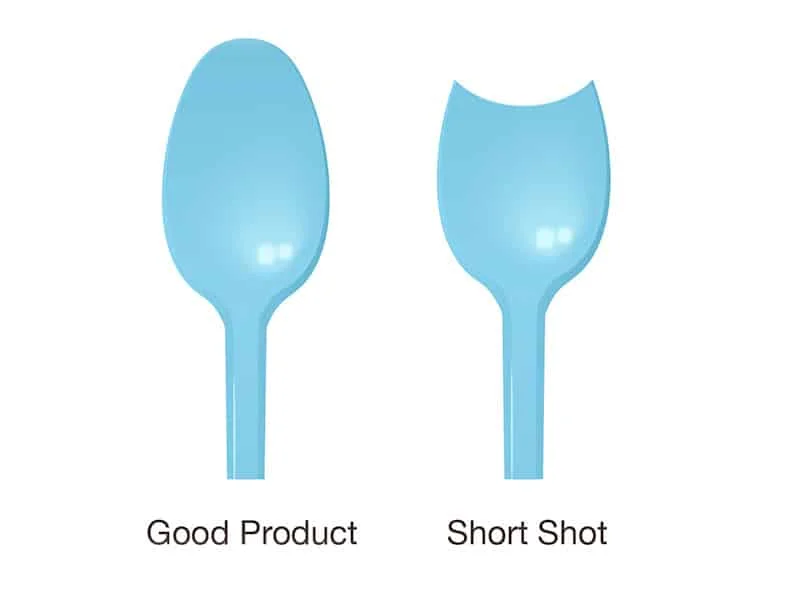
| Item | Defect | Cause | Mold Correction | Molding Improvement |
|---|---|---|---|---|
| 1 | Short Shot | Small parts and corners of the finished product cannot be fully formed due to inadequate mold processing or poor venting, design defects (insufficient wall thickness) caused by insufficient injection dosage or pressure during molding. | Modify the mold in the short-shot area, adopt or improve venting measures, increase wall thickness, and improve the gate (enlarge gate, add gates). | Increase injection dosage, increase injection pressure, etc. |
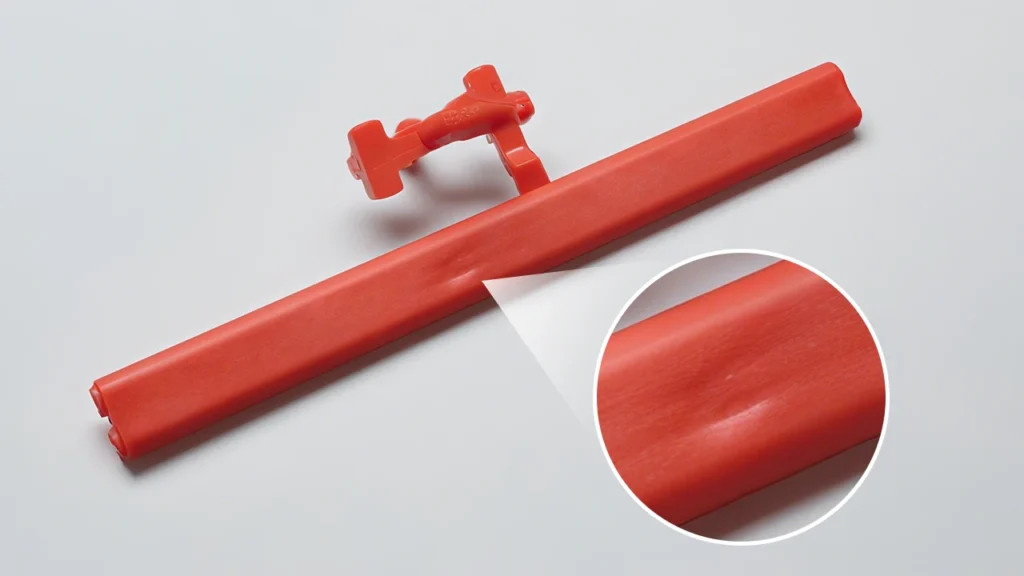
| 2 | Sink Mark | Commonly occur in uneven wall thickness, caused by different cooling/solidification shrinkage of the molten plastics, such as the edges with side walls, back ribs, and the back of boss columns. | Reduce wall thickness, but retain at least 2/3 of the original thickness; enlarge runner diameter; enlarge gate; add venting. | Increase melt temperature, increase injection pressure and extend holding time, ect. |
| 3 | Flow Lines | Often occurs on the back of boss columns or ribs, or due to stress marks caused by excessively high core pins or ejector pins. | Reduce the “volcano” sink effect; correct core/ejector pin height; texture the cavity surface; reduce mold surface polish. | Reduce injection speed, and increase injection pressure, etc. |
| 4 | Flow Marks | It occurs at the gate, often due to low mold temperature, high injection speed and pressure, improper gate location, or plastic hitting the turbulence structure during pouring. | Relocate the gate; polish the runner; increase cold slug well size; enlarge gate; add surface texture. | Increase mold temperature, reduce injection speed, and decrease injection pressure, etc. |
| 5 | Weld Line | Occurring at the confluence of two streams, such as the merging of two inlet streams and the merging of streams bypassing the core, due to a cooled material and poor venting | Change the gates, add a slug well, open an exhaust groove or bite pattern on the mold surface, etc. | Increase melt temperature, increase mold temperature, etc. |
| 6 | Flash | Commonly occurs at the parting line of mold halves due to poor mold fit, improper processing of mold edges, insufficient clamping force, high melt temperature/pressure. | Modify the mold. | Increase clamping force, increase melt temperature, decrease injection pressure, reduce holding time and increase holding pressure, etc. |
| 7 | Warpage | Slender parts, thin-walled parts with large areas, or larger products with asymmetric structures are caused by uneven cooling stress or uneven ejection force during molding. | Modify ejector pins; add retaining pins; apply texture to core side to control warpage. | Adjust cavity mold temperatures, reduce holding pressure, etc. |
| 8 | Surface Contamination | Rough mold surface; for PC, sometimes caused by excessive mold temperature; mold surface contamination with residue or oil. | Clean mold surface; polish. | Lower mold temperature, etc. |
| 9 | White Streaks | Occurs at sharp corners of thin walls or roots of thin ribs during demolding due to poor force distribution, improper ejector pin placement, or insufficient draft angle. | Increase fillet radius at corners; increase the draft angle; add ejector pins or increase their area; polish the mold surface; polish ejector pins. | Reduce injection speed. |
| 10 | Mold Damage | Manifests as ejection difficulties, mold scoring, or surface scuffing. Primarily due to insufficient draft angle or rough mold surface. Molding conditions also influential. | Increase draft angle; polish mold surface; add/ modify retaining pins for parts sticking in cavity. | Decrease injection pressure, reduce holding pressure and time, etc. |
| 11 | Air Bubbles | Common in transparent PC parts. Caused by trapped air during injection, improper mold design, or unsuitable molding conditions. | Modify gate; polish runners for PC; add venting. | Strictly adhere to drying conditions, increase injection pressure and decrease injection speed, etc. |
| 12 | Mismatch | Occurs at the interface of mold halves, sliders, lifters, etc., appearing as a misaligned step. Caused by improper mold assembly or mold issues. | Modify the mold; reassemble mold properly. | |
| 13 | Other defects such as ejector pin burns, scorching, flow lines, silver streaks, etc., can also occur. | |||
| 14 | Dimensional Out-of-Tolerance | Causes include issues with the mold, or improper molding conditions that lead to inappropriate molding shrinkage rates. | Usually, changing the holding time and injection pressure (the second stage) has the greatest impact on the size. For example, increasing the injection pressure and increasing the holding pressure can significantly increase the size and reduce the mold temperature. Increasing the gate or adding the gate can improve the adjustment effect. | |
2. Resolve Defects and Improve Quality
In depth analysis of common defects in thin-walled injection molded parts is not only the core link to improve product quality, but also the key support for enterprises to build advantages in fierce market competition. The analysis of the causes of each defect, mold correction plans, and optimization measures for molding processes all embody the wisdom and experience accumulated in industry practice, and are important assets for enterprises to achieve refined production. For injection molding enterprises, taking proactive and targeted measures, strengthening the full process monitoring and management of the production process, and continuously optimizing mold design and molding processes are the only way to improve product quality.