Have you ever stood in front of your microwave holding a baby bottle or food container labeled “PPSU” and wondering whether it’s safe to heat? You’re not alone. Nowadays, with so many types of plastics on the market and each with different heat tolerances and safety profiles, it’s easy to feel uncertain.
But here’s the good news: PPSU is one of the most microwave-friendly plastics available today. In this article, we’ll cover everything you need to know about microwaving PPSU, from the science behind its heat resistance to step-by-step practices.
What Exactly Is PPSU?
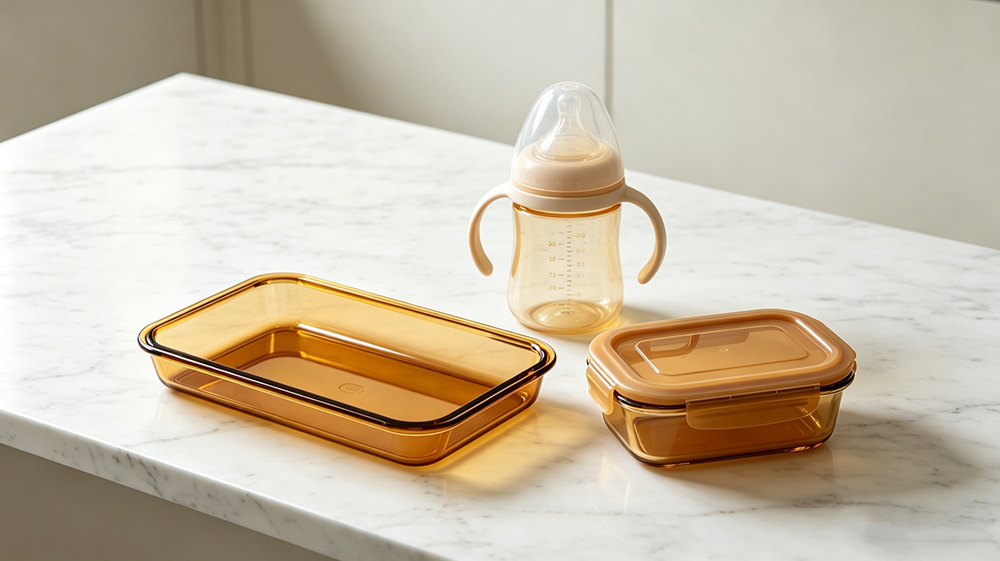
PPSU (polyphenylsulfone) is a high-performance polymer composed of aromatic rings connected by sulfone (-SO₂-) groups. Unlike PSU, the molecular chain of PPSU contains no isopropylidene groups; instead, it incorporates a large amount of biphenyl units. As a result, PPSU has stronger heat resistance than PSU and many other plastic materials.
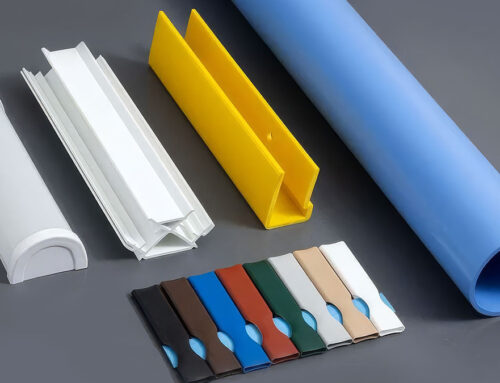
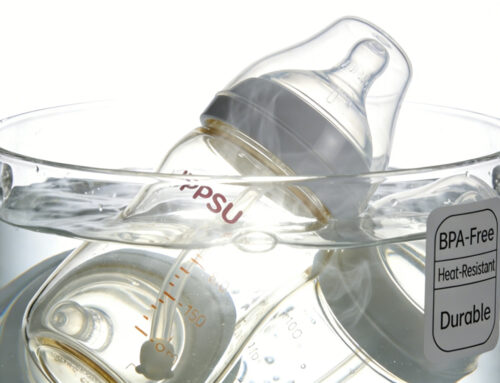
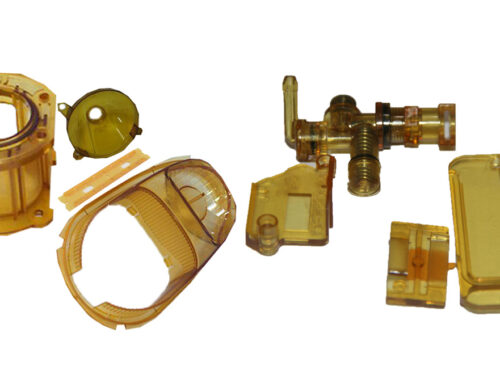
PPSU is most commonly found in products such as
- Baby bottles
- Reusable food containers
- Medical devices
- Catering equipment
Can PPSU Be Microwaved?
Let’s get straight to the point. The answer is: Yes. PPSU can be used safely in a microwave oven. With a glass transition temperature as high as around 220°C (428°F), it won’t melt, crack, warp, or release harmful chemicals in high heat produced by a microwave. This conclusion is supported by material scientists, manufacturers, and independent testing.
Multiple authoritative sources confirm that PPSU withstands microwave heating. In fact, it outperforms many other plastics commonly considered “microwave-safe,” such as polypropylene (PP). While PP is generally considered microwave-safe, PPSU is rated as superior in this category due to its much higher thermal stability.
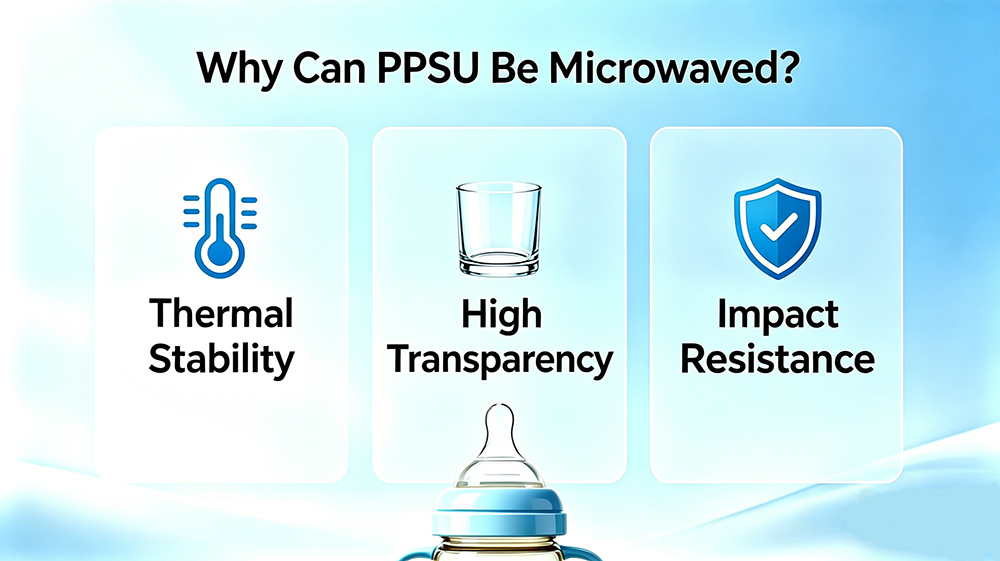
Why Can PPSU Be Microwaved?
1. Thermal Stability
With a heat distortion temperature up to 207°C (405°F), PPSU plastic can withstand sustained exposure to very high temperatures without deforming, softening, or releasing harmful chemicals. During the microwave heating process, local hot spots may appear on the material surface due to the effect of microwave energy, but PPSU can well withstand the heat.
PPSU’s exceptionally high heat distortion temperature makes it suitable not only for microwave heating but also for steam sterilization, boiling water disinfection, and repeated use in dishwashers.
2. Transparency
Because PPSU material is highly transparent, it does not absorb microwave energy. Rather, it can transmit it effectively. Instead of heating up itself, PPSU-made containers allow microwaves to pass through to the food or liquid inside, thus maintaining the microwave’s heating effect. Meanwhile, the container remains relatively cool after heating, which reduces the risk of burns when handling it after heating.
3. High Strength and Impact Resistance
The high strength and impact resistance of PPSU make it capable of withstanding mechanical stress and vibration that may occur during the microwave heating process. These properties ensure the stability and durability of PPSU-made containers when heated in a microwave oven.
PPSU vs. Other Plastics in the Microwave
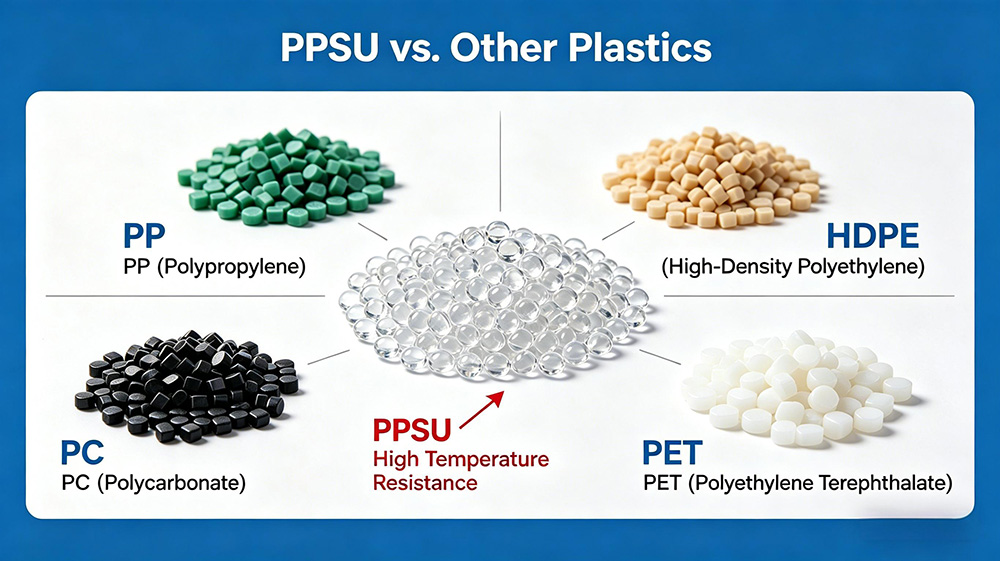
| Plastic Type | Microwave-Safe? |
|---|---|
| PPSU | Yes; withstands heat up to 180-207°C without deforming or releasing toxins |
| PP | Yes; lower heat tolerance than PPSU |
| HDPE | Limited; may warp; not recommended for high heat |
| PC | No; may leach BPA when heated |
| PET | No; Not designed for microwave use |
As we can see in the table, PPSU outperforms other plastics in terms of microwave resistance: it is definitely much safer when heated in a microwave oven than others.
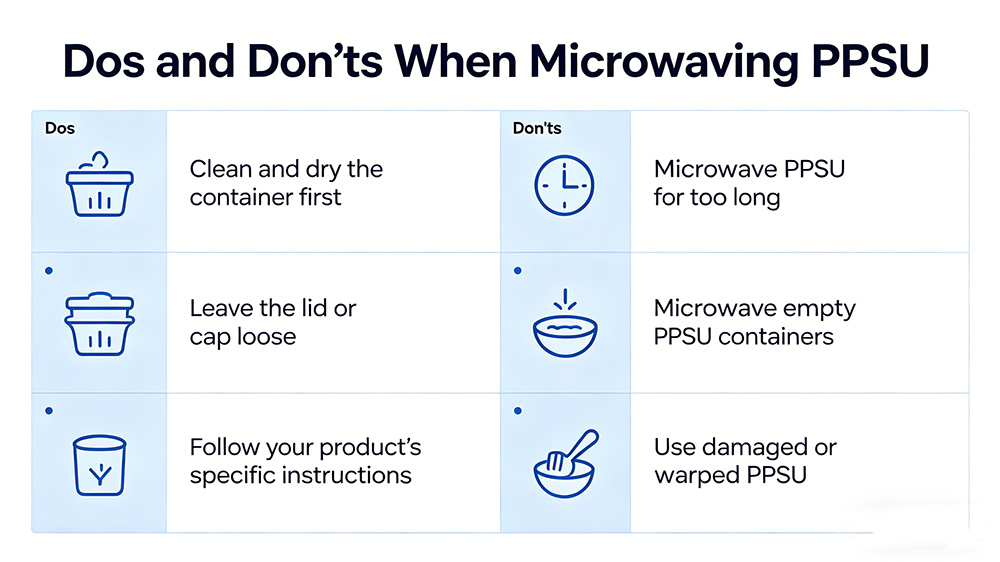
Dos and Don’ts When Microwaving PPSU
While PPSU itself is microwave-safe, how you use it matters as well. Please stick to the following guidelines to ensure safe and effective heating:
Common Myths About PPSU and Microwaves
Let’s dispel a few misconceptions:
Myth 1: “No plastic material is microwave-safe.”
Reality: While many kinds of plastics are not microwave-safe, PPSU is specially designed for high-heat applications. It is totally different from a disposable takeout container.
Myth 2: “PPSU will release harmful chemicals when heated.”
Reality: PPSU is BPA-free and BPS-free, and it meets strict food-contact safety standards, including FDA certification. It does not release harmful substances when properly used.
Myth 3: “Microwaving PPSU will make it cloudy or brittle.”
Reality: High-quality PPSU is designed to withstand frequent sterilization without degradation of properties such as clarity or durability.
Conclusion
Based on material science, manufacturer specifications, and real-world testing, PPSU is definitively microwave-safe. Its thermal stability, transparency, and high strength as well as impact resistance make it one of the best plastic options for microwave use today. As an experienced and trustworthy PPSU products manufacturer, KingStar specializes in high-quality PPSU baby bottles and food containers that meet rigorous safety standards. Our PPSU products are BPA-free and toxin-free, durable, and high-temperature-resistant. Visit our website or contact us at sales@kingstarmold.com or leave online message to learn more about our PPSU products.

Boasts more than 20 years of professional experience in the manufacturing industry, with profound expertise in injection molding and mold building. Possesses comprehensive technical capabilities covering mold design, processing and molding optimization, providing reliable technical support for product development and production.