Product quality, production efficiency and supply chain stability are closely related to the selection of suitable processing and manufacturing partners for production enterprises.
In the past, enterprises would choose different suppliers to complete each processing link. This traditional cooperation mode will bring many extra problems. It increases the difficulty of work coordination and corporate operating costs, and also extends the overall production cycle of products.
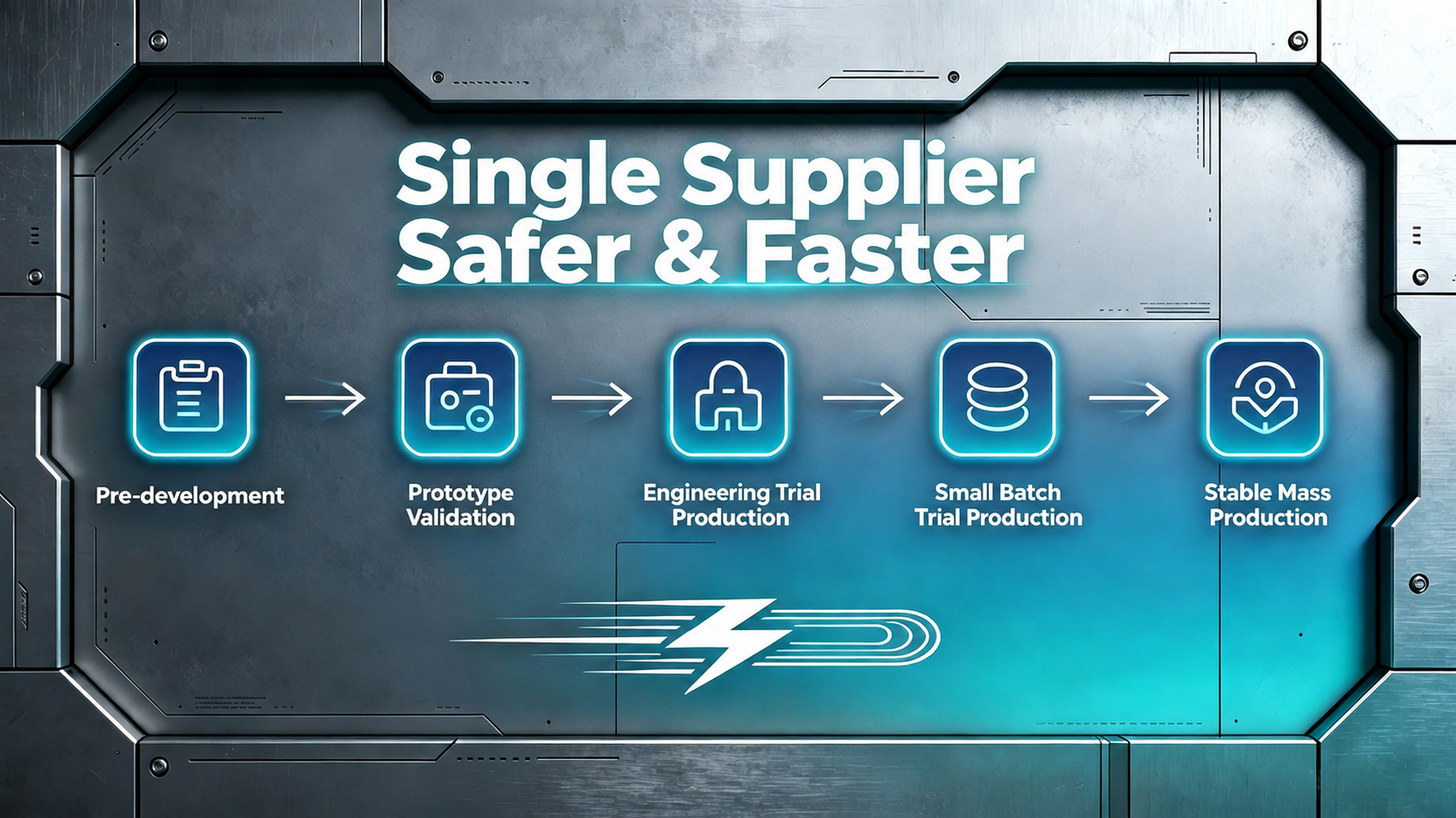
The global manufacturing industry is facing increasingly fierce market competition, driven by rising emerging manufacturers and oversupply of industrial products. More and more original equipment manufacturers (OEMs) begin to adopt the single-supplier cooperation mode for metal part processing. Enterprises only cooperate with one professional manufacturer. This single manufacturer can complete the whole production process independently, from early engineering evaluation and prototype development to later finished product assembly and performance testing.
The reason is that single-source production and processing modes have the following practical advantages for manufacturing enterprises:
- Reduced communication complexity
- Better quality consistency
- Faster engineering changes
- Lower total manufacturing costs
- Improved delivery reliability
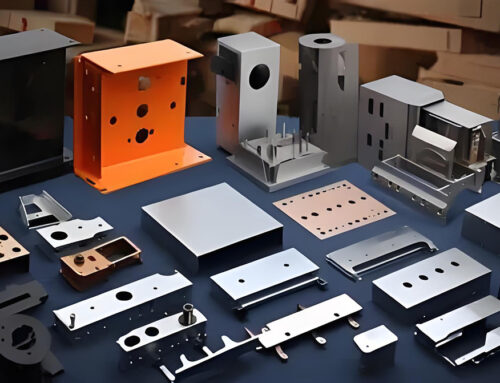
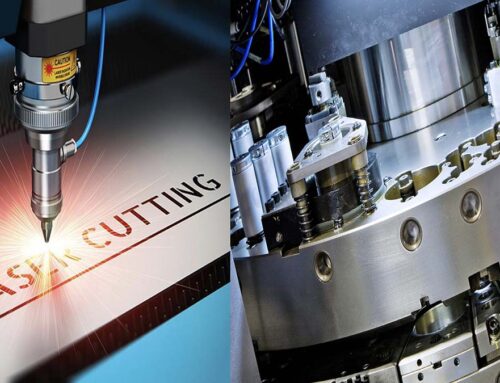
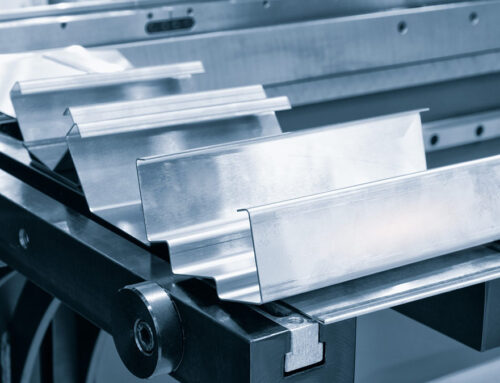
KingStar Mold provides integrated production and processing solutions for enterprises that need high-precision metal parts and assembled products. Through our sheet metal fabrication services, we integrate multiple sheet metal processing technologies, including laser cutting, bending, welding, surface finishing, precision detection, and product assembly. It can provide processing support for customers’ projects from prototype trial production to mass formal production.
This paper mainly analyzes the advantages of single-supplier cooperation mode in laser cutting, metal forming, and product assembly. The following research results we offer can help OEMs simplify procurement work, optimize product quality, and build a more efficient manufacturing supply chain system.
Why Should You Choose a Single Supplier for Metal Fabrication Instead of Multiple Vendors?
What Problems Do Multiple Fabrication Suppliers Create?
A typical multi-supplier workflow may look like:
Each cooperative supplier has professional advantages in its own processing field. However, each additional transportation and processing link will bring uncertain risks to product production:
- Longer production cycles
- More transportation costs
- Different quality standards
- Difficult engineering communication
- Increased inventory requirements
- Unclear responsibility when problems occur
For instance, if the final assembled shell has position deviation and assembly errors, enterprises cannot quickly confirm the cause of the problem. The error may come from laser cutting deviation, bending forming errors, welding deformation or improper assembly operation.
The single-supplier cooperation mode can well solve the above communication and responsibility division problems. All product processing links are completed in the internal system of one manufacturer, and the whole production process can be effectively controlled.
How Does a Single Supplier Simplify Project Management?
Enterprises only need to connect with one engineering and production team after choosing an integrated processing supplier. This mode avoids the complex coordination work between multiple independent enterprises, and greatly simplifies the daily management of processing projects.
Centralized Engineering Communication
Improved Design for Manufacturability (DFM)
-
all departments obtain the latest modified drawings
-
the production procedures are consistent with the latest design scheme
-
the product inspection standards remain unified
-
all staff clearly understand the assembly technical requirements
Which Projects Benefit Most from a Single Fabrication Supplier?
The single-source processing mode is more suitable for product projects with complex processing procedures and strict quality inspection standards. This cooperation mode can exert the maximum value in such projects.
From our experience, typical products include:
| Industry | Typical Components | Main Benefit |
|---|---|---|
| Industrial Equipment | Frames, brackets, cabinets | Better process coordination |
| Electronics | Enclosures and chassis | Improved assembly accuracy |
| Automation | Machine structures | Faster engineering changes |
| Medical Equipment | Precision housings | Better traceability |
| EV Systems | Battery and charging enclosures | Reduced supply chain risk |
For these applications, the integrated single supplier can form a complete processing chain from design confirmation to finished product delivery, and make the whole project process more smooth.
How Does Integrated Laser Cutting, Forming, and Assembly Improve Product Quality?
How Does One Manufacturing Workflow Reduce Tolerance Stack-Up?
How Do GD&T and CMM Inspection Improve Dimensional Accuracy?
-
Positioning accuracy of mounting holes and fastening structures
-
Flatness of product matching contact surfaces
-
Parallelism between different structural edges of parts
-
Perpendicularity of bent and formed plate parts
-
Profile accuracy of special-shaped complex surfaces
-
Realize accurate detection of complex workpiece shapes and key dimensional data
-
Ensure consistent and repeatable detection results of different production batches
-
Form complete digital detection files to facilitate product quality traceability
-
Find dimensional deviation problems in advance before product assembly operation
How Does Integrated Quality Control Prevent Manufacturing Defects?
-
Material verification
-
Laser cutting inspection
-
Forming accuracy checks
-
Welding quality control
-
Assembly verification
-
Final dimensional inspection
Why Are FAI and Process Control Important for Production Reliability?
-
Dimensional accuracy
-
Drawing scheme verification
-
Raw material qualification
-
Surface effect
-
Functional detection
-
Bend angle variation
-
Hole position accuracy
-
Weld consistency
-
Critical assembly dimensions
Can a One-Stop Metal Fabrication Supplier Reduce Overall Manufacturing Costs?
-
Raw material cost and product processing cost
-
Goods logistics and transportation cost
-
Daily supplier management cost
-
Product inventory cost
-
Technical engineering communication cost
-
economic losses caused by product quality problems
-
Economic losses arising from production schedule delays
What Is the Difference Between Part Cost and Total Cost of Ownership?
-
Management of multiple purchase orders
-
Arrangement and supervision of diverse production schedules
-
Tracking and handling of different shipping procedures
-
Operation and docking of multiple quality inspection systems
How Does Supplier Consolidation Reduce Hidden Manufacturing Costs?
Lower Logistics Costs
-
Saved freight charges for multiple transshipment
-
Reduced packaging material consumption and packaging costs
-
Lower product damage risks in repeated handling
-
Avoided product delivery delays caused by multiple transshipment links
Reduced Supplier Management Workload
-
Daily business communication and technical docking
-
Production schedule coordination and adjustment
-
Sorting and filing of various business documents
-
Follow-up inspection of product quality problems
Lower Inventory Requirements
The following table shows the detailed cost comparison between the single one-stop supplier mode and the multi-supplier cooperation mode:
| Cost Factor | Multiple Suppliers | One-Stop Metal Fabrication Supplier |
|---|---|---|
| Unit Part Price | May appear lower | Competitive pricing |
| Transportation | Multiple shipments required | Reduced logistics |
| Supplier Communication | Several contacts | One project team |
| Quality Management | Different systems | Unified process control |
| Inventory | Higher work-in-progress stock | Lower inventory needs |
| Engineering Changes | Must coordinate multiple vendors | Implemented through one workflow |
| Risk of Delays | Higher due to supplier dependency | More predictable scheduling |
| Overall TCO | Often higher | Usually lower |
When Does a Single Supplier Provide the Greatest Cost Advantage?
Prototype Development
Low-Volume Production
Complex Assemblies
What Should You Look for When Choosing a Single Supplier for Laser Cutting, Forming, and Assembly?
Does the Supplier Have Complete Manufacturing Capabilities?
-
Laser cutting
-
CNC punching
-
Sheet metal bending
-
Welding
-
Hardware insertion
-
Surface finishing
-
Assembly
-
Inspection
Does the Supplier Provide Engineering and Quality Support?
-
DFM analysis
-
Drawing review
-
Material recommendations
-
Prototype support
-
Inspection documentation
-
Quality feedback
What Quality Indicators Should Buyers Evaluate?
Then, what items should buyers evaluate in advance? We’ve listed some evaluation criteria that you might find useful:
| Evaluation Area | Questions to Consider |
|---|---|
| Engineering Capability | Can the supplier provide DFM recommendations? |
| Manufacturing Scope | Can they complete cutting, forming, welding, and assembly? |
| Inspection Capability | Do they use professional measurement equipment? |
| Quality System | Are certifications and procedures available? |
| Production Experience | Can they support prototypes and mass production? |
Why Is KingStar Mold a Reliable One-Stop Partner for Custom Metal Fabrication?
-
Precision laser cutting
-
CNC forming
-
Welding
-
Surface finishing
-
Quality inspection
Conclusion: Why Choosing One Supplier Is a Better Manufacturing Strategy
Frequently Asked Questions (FAQ)
-
Isn’t it risky to put all my production with one supplier? What if they have a machine breakdown or capacity issue?
This is a fair concern, but the risk profile is actually more nuanced than it appears.With multiple suppliers, you face fragmented risk—if one vendor fails, your entire production chain can still be blocked because that specific processing step is missing. With a single integrated supplier, you have centralized accountability. If a laser cutter goes down, a competent full-service supplier like KingStarMold has redundant equipment and flexible workarounds within their own facility.
-
What types of products or projects are NOT suitable for a single-supplier model?
Excellent question—the single-supplier model is not a one-size-fits-all solution.The article mentions that complex assemblies with strict quality standards benefit most. Conversely, the model is less suitable for:
-
How do I verify that a single supplier actually has all the capabilities they claim—especially assembly and quality inspection—before signing a contract?
Due diligence is critical. Beyond checking their website or capability list, here is a practical audit framework:
-
How does a single supplier handle urgent engineering changes differently than multiple suppliers? Can you give a real scenario?
This is where the single-supplier model truly shines.Scenario: You are developing a new industrial equipment enclosure. After prototype testing, you discover that:
References
-
ISO 9001 Quality Management Systems https://www.iso.org/iso-9001-quality-management.html
-
ASME Y14.5 Dimensioning and Tolerancing Standard https://www.asme.org/codes-standards/find-codes-standards/y14-5-dimensioning-tolerancing
-
Lean Manufacturing Principles https://www.lean.org/
-
KingStar Mold Sheet Metal Fabrication Services https://kingstarmold.com/sheet-metal-fabrication/

Boasts more than 20 years of professional experience in the manufacturing industry, with profound expertise in injection molding and mold building. Possesses comprehensive technical capabilities covering mold design, processing and molding optimization, providing reliable technical support for product development and production.